
Chief Executive Officer
Published: September 29, 2026
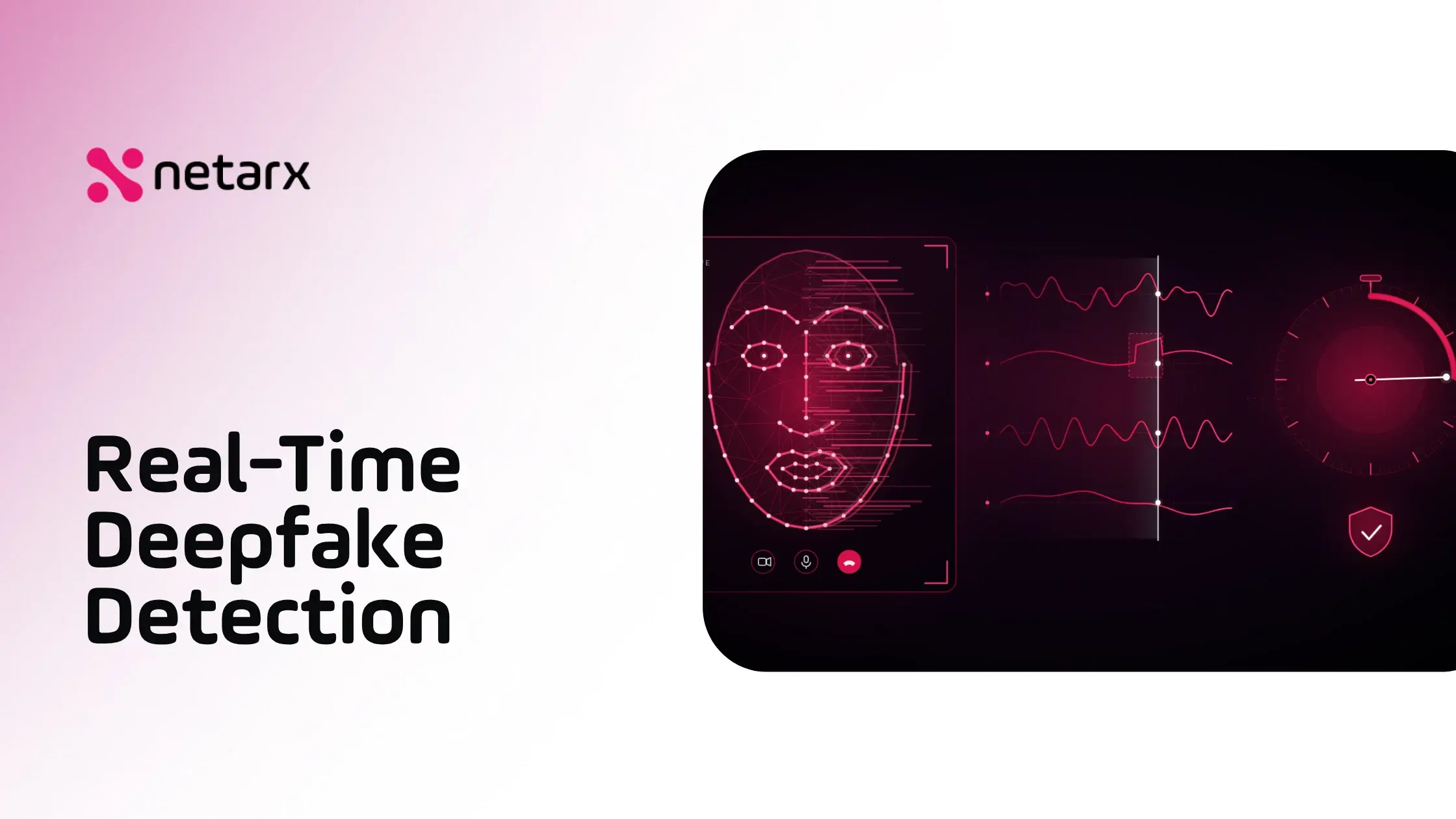
Real-time deepfake detection analyzes live video, voice and messages as they happen and returns a trust verdict while the conversation is still in progress, before anyone acts on a fraudulent request.
It works by streaming short windows of media and context through several models at once: visual forensics, audio forensics, metadata and device checks, and behavioral signals, then fusing them into one verdict.
"Real time" should mean a verdict in about a second or less, delivered continuously, without adding delay to the call. A report after the call ends is forensics, not real-time protection.
Media forensics alone is fragile against new generators and poor video quality. The strongest systems weigh signals the attacker cannot easily fake, such as device fingerprints and caller metadata.
When evaluating vendors, ask for time to first verdict, how often verdicts refresh, false positive rates on real calls, and what the employee sees on screen.
Real-time deepfake detection is technology that inspects live video, audio and messages during a conversation and flags AI-generated or manipulated content within seconds, while the interaction is still happening. Its goal is to warn a person before they approve a payment, reset a password or share data with an impostor.
The difference from ordinary deepfake detection is timing. Many detectors analyze uploaded files after the fact, which is useful for investigations and content moderation. Real-time detection has to work on a live stream, with partial information, under a strict time budget, and it has to present its answer in a way a busy employee can act on instantly.
Real-time deepfake detection is one layer of AI impersonation protection, which also covers identity verification and response workflows.

Deepfake fraud is decided during the call, so a verdict that arrives after it is forensics, not protection.
Real time means three separate numbers, not one claim: time to first verdict, refresh interval and added media delay. Vendors conflate them.
Continuous scoring matters as much as speed. A clean first few seconds proves nothing when a face swap can be switched on mid-call.
Detection should not sit in the audio or video path. Analyzing a copy of the stream out of band keeps the call from feeling broken.
Media forensics ages badly. Compression, low light and phone codecs strip the artifacts, and each new generator removes another tell.
The durable signals are the ones an attacker cannot re-train away: device fingerprint, caller metadata, network origin and behavior.
Test on your own calls, networks and devices. Replay consented deepfakes of your own executives over real meeting platforms and time the verdict yourself.
In This Article
Deepfake fraud succeeds in the minutes a victim spends on a call, so detection that arrives later cannot stop the loss.
Live calls are already the attack surface. In a 2025 Gartner survey of 302 security leaders, 43% reported a deepfake audio call incident and 37% a deepfake in a video call.
One call can move millions. At Arup, an employee joined a video call with deepfakes of the CFO and colleagues and made 15 transfers totaling $25.6 million, Fortune reported.
Harm starts on first view. The US GAO notes that disinformation can spread from the moment a deepfake is viewed, even if it is later identified as fake.
Regulators expect it. FinCEN's November 2024 alert FIN-2024-Alert004 describes deepfake media used to get past identity verification at financial institutions.
For more numbers, see Netarx's deepfake statistics for 2026.
A real-time detector copies the live stream, runs several independent analyses in parallel, fuses their results, and pushes a verdict back to the user, then repeats for as long as the call lasts.
Capture: a copy of the audio, video or message is taken at the endpoint or meeting platform, leaving the original call untouched.
Analyze in parallel: short windows of media go to visual and audio forensics while device, metadata and behavioral checks run at the same time, some before the first word is spoken.
Fuse: an ensemble weighs each signal by how reliable it is in the current conditions, for example trusting device signals more when video is heavily compressed.
Decide and display: the result appears as a simple in-call signal, and high risk results can alert the security team.
Repeat: scoring continues for the whole interaction, so a face swap switched on mid-call is still caught.
Real-time detection combines signals from the media itself with signals from around it. The first group catches what looks or sounds wrong; the second catches who and where the content really comes from.
Signal family | What it checks | What it catches | Weakness on its own |
|---|---|---|---|
Visual forensics | Frame artifacts, facial boundaries, lighting, skin texture, GAN or diffusion fingerprints | Face swaps and synthetic avatars | Degrades with compression, low light and new generators |
Temporal consistency | Transitions between frames, blinking, head motion, jitter | Frame by frame manipulation | Better generators smooth these out |
Audio forensics | Spectral artifacts, prosody, breathing, room acoustics | Cloned and synthetic voices | Phone codecs strip detail |
Audio-visual sync | Lip movement against speech sounds | Dubbed or puppeted faces | Needs clear video of the mouth |
Physiological signals | Eye gaze, micro-expressions, pulse from skin color changes | Avatars without real biology | Sensitive to camera quality |
Metadata and device | Device fingerprint, caller ID integrity, network origin, virtual camera or injected stream | Spoofed callers and injected feeds | Needs access to the endpoint or carrier data |
Behavioral and context | Time of day, location, language patterns, relationship history, unusual requests | Impostors who look right but act wrong | Needs a baseline for each contact |
The GAO found that detection models may not work reliably in real world conditions such as poor lighting or different video quality, and that newer generators are expected to remove today's tells, such as abnormal blinking. That is why the strongest systems give heavy weight to metadata, device and behavioral signals, which a better face or voice model does not change. Netarx makes this case in Video deepfake detection isn't enough.
"Real time" in deepfake detection should mean a verdict fast enough to change a decision during the conversation, typically about one second or less, refreshed continuously, with no delay added to the call itself. Vendors use the term loosely, so pin it down with three separate numbers.
Time to first verdict: how long from the first frame or first spoken word until the user sees a green, yellow or red signal. This is the number that matters most for short, urgent calls.
Refresh interval: how often the verdict updates. A clean first few seconds does not prove the rest of the call is genuine, since attackers can switch on a face swap or voice clone mid-call.
Added media delay: whether the detector sits in the audio or video path. Inline processing that delays speech makes calls feel broken; ITU-T's G.114 recommendation exists precisely because one-way delay degrades voice conversations. Well designed detectors analyze a copy of the stream out of band, so the call runs normally.
It helps to separate what vendors call "real time" into tiers:
Tier | Verdict timing | Useful for | Stops a live fraud? |
|---|---|---|---|
Real time | About 1 second or less, continuous | Live calls, meetings, help desk | Yes |
Near real time | Several seconds to a minute | Voicemail, messages, onboarding video | Sometimes |
Batch or post-call | Minutes to hours after | Investigations, compliance review | No |
Speed is a trade-off with accuracy. Longer windows of audio and video give models more evidence, so good systems show a provisional verdict fast, then firm it up as evidence accumulates, and use cheap signals such as device and caller metadata that are available before the first word is spoken.
Test real-time claims on your own calls, networks and devices, not on a vendor's curated demo clips. Ask every vendor these questions:
Question | Why it matters | A good answer |
|---|---|---|
What is your median and worst case time to first verdict? | Averages hide slow calls | A measured figure, about a second or less, on real meeting platforms |
How often does the verdict refresh? | Attacks can start mid-call | Continuous scoring for the whole call |
Does detection add any delay to audio or video? | Inline delay breaks calls | Out of band analysis, no added delay |
Which signals do you use beyond pixels and audio? | Media forensics alone ages fast | Device, metadata and behavioral signals fused with media |
What are your false positive rates on real, compressed calls? | Alert fatigue kills adoption | Rates measured on production traffic, not lab clips |
How quickly do you adapt to a new generator? | New models appear monthly | Multiple models, frequent retraining, signal based fallbacks |
What does the employee actually see? | A score nobody reads protects no one | A simple in-call signal with a clear next step |
Which platforms and devices are covered? | Attackers pick the unprotected channel | Zoom, Teams, Meet, Webex, phone and messaging on desktop and mobile |
During a pilot, replay consented deepfakes of your own executives over real meetings and phone lines, and record time to verdict with a stopwatch. For practical tips on the human side, see how to spot a deepfake on a video call.
Netarx runs real-time deepfake detection across video, voice, messaging, email and files, and shows every user a simple green, yellow or red verdict.
Live meetings and calls: the Netarx platform analyzes frames, lip sync, eye gaze and pulse signals on Zoom, Microsoft Teams, Google Meet and Webex, and checks phone calls and texts on iOS, Android and macOS.
Signals beyond the media: Netarx evaluates over 1,000 metadata signals, including device fingerprints and caller metadata, so verdicts do not depend on pixels alone.
Ensemble scoring: multiple inference models cross-check each verdict to cut false positives.
Identity over time: Tiers of Identity promotes contacts from unknown to trusted as they verify and interact.
One platform, simple signal: an all-media defense platform with an easy to understand traffic light, delivered as SaaS or cloud or on-prem.
See why teams choose Netarx, test a suspicious image with the AI Content Detector, or book a live demo.
SOURCES & REFERENCES

 Verified
Chief Executive Officer
CEO/Founder of Netarx LLC, Real-time detection of deepfake and social engineering threats via enterprise video, voice and email. Managing Partner of Koach Capital, a Private Equity firm managing a multitude of commercial real estate (CRE) funds whose focus is retail sale-leasebacks. Sandy's entrepreneurial success began by founding a network integration and services provider that served large enterprises. We focused on advanced technologies including Business Intelligence (BI), Network & Information Security, Virtualization, Storage Area Networks, Unified Communications and Data Center Services. In 2009, Netarx acquired the VAR business of Analysts International (including Sequoia and Entree Systems). In 2011 Netarx was acquired by Logicalis (a division of Datatec - Symbol LSE: DTC) and stayed on as its Chief Technology Officer. He continued to build by founding Verge.io (Formerly Yottabyte) and Service.com. Also, Sandy served as a General Partner of Ludlow Ventures, a venture capital fund focusing on investments in early-stage tech companies. Sandy contributes to the community via lectures, publications and developing new technologies - he currently holds 8 Patents.

Real-time deepfake detection analyzes live video, audio and messages during a conversation and flags AI-generated or manipulated content within about a second, so people can stop before acting on a fraudulent request.
blog
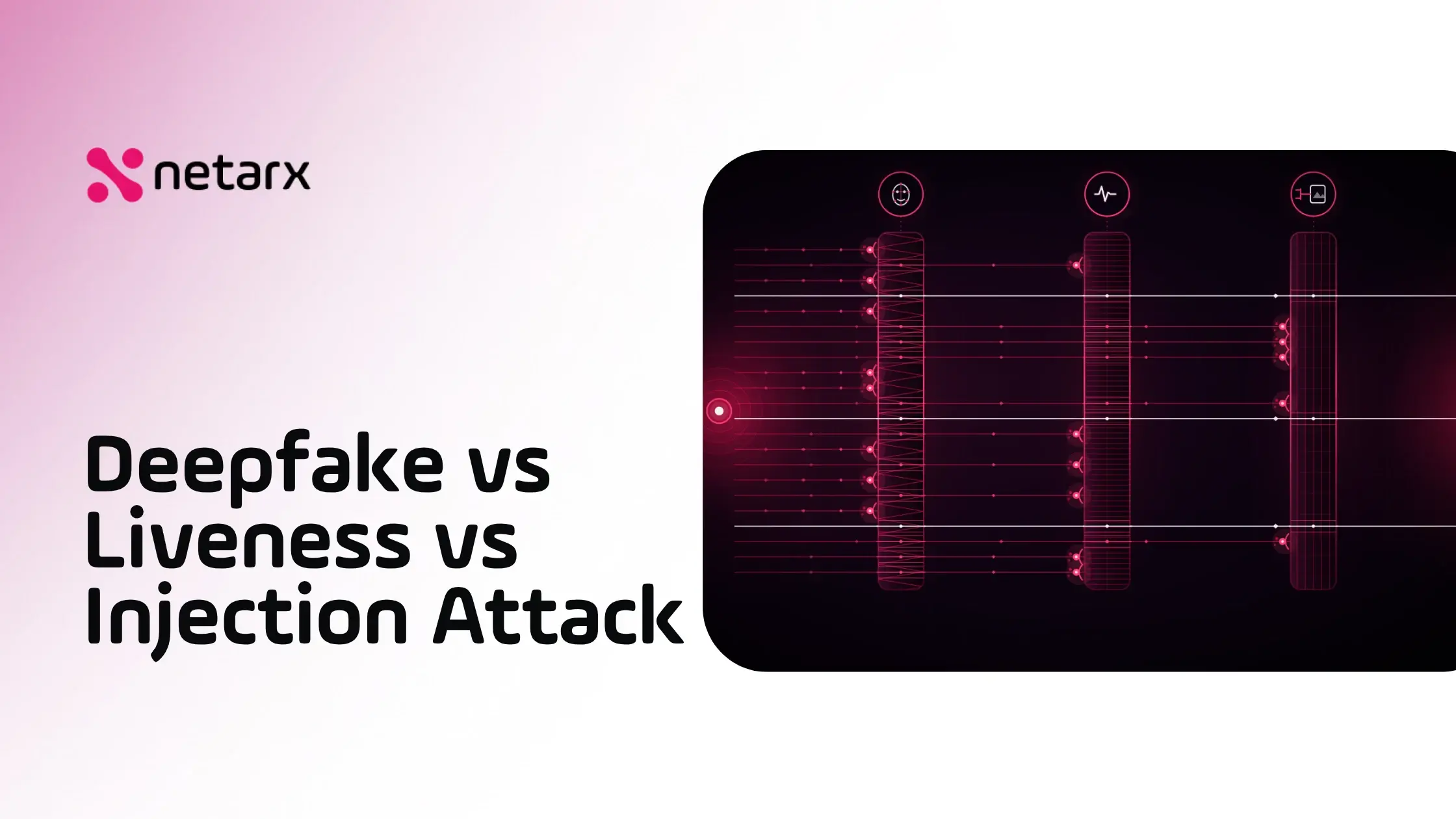
Deepfake detection asks whether media is synthetic or manipulated. It catches AI faces and cloned voices, but can miss high quality fakes and says nothing about who is really on the other end.
blog
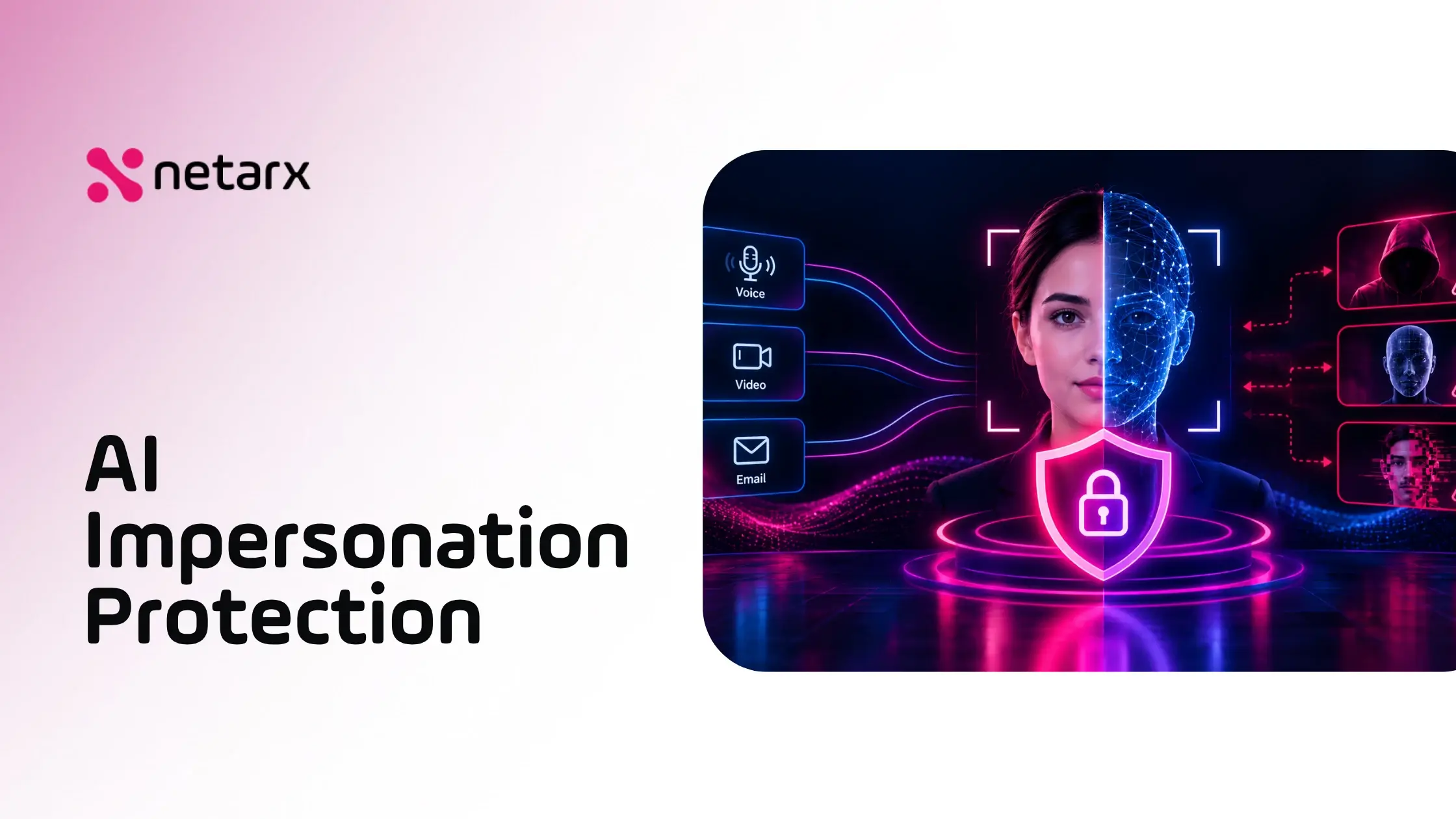
AI impersonation fraud uses cloned voices, deepfake video and AI-written messages to pose as executives, vendors or candidates. It is mainstream: 62% of organizations saw a deepfake attack in the past year (Gartner, 2025).
blog
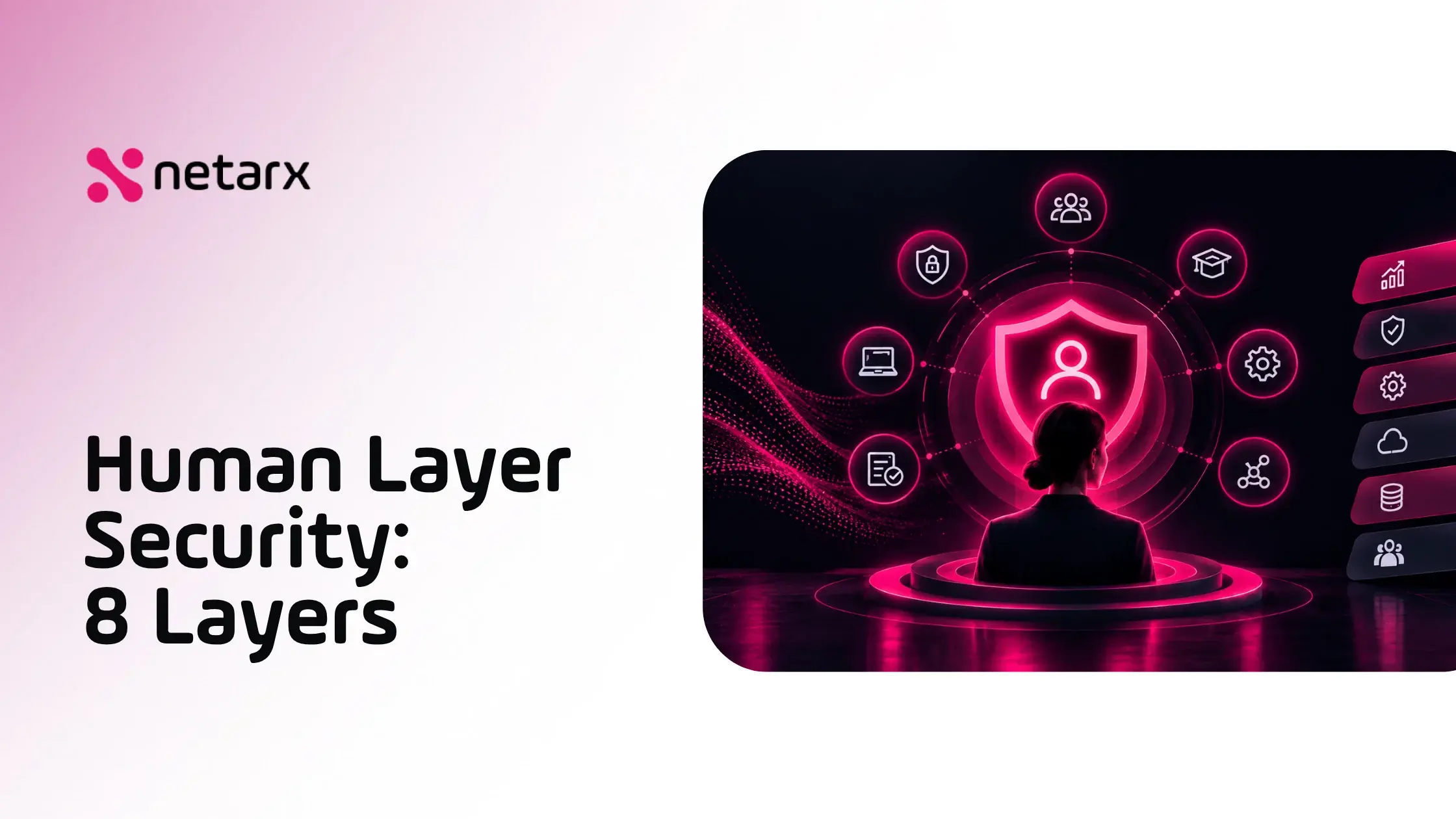
Human layer security is the discipline of protecting the people layer of an organization: the judgment calls, conversations, approvals and identity claims that sit above the seven OSI layers and that no firewall inspects. It is commonly called Layer 8 security.