
Chief Executive Officer
Published: August 1, 2025
Deepfake detection alone can’t confirm who you’re talking to, it spots fakery, not identity, and fails on real-world video.
Netarx Identity Key shifts from detection to recognition, scoring 50+ metadata signals across channels to make deception unconvincing.
Deepfake detection is the use of AI models to analyze video, audio, or images for signs of synthetic manipulation, artifacts such as unnatural blinking, audio-visual desynchronization, or subtle facial distortions, and to flag content that appears artificially generated. It works by training classifiers (both supervised and unsupervised) to spot anomalies in frames and waveforms.
The catch: detection only answers “does this look fake?” It does not answer “is this really the person I think it is?” Because most models are trained on known deepfakes, they are vulnerable to new variants, degrade on compressed or poorly lit video, and act only after content arrives. That leaves a verification gap, and attackers exploit it.

Detection is brittle. It fails on compressed, low-light, or low-bandwidth video.
Government agrees. GAO, FBI, and FinCEN flagged detection’s limits and rising AI fraud in 2024.
Recognition beats verification. Identity lives in context, not pixels.
Metadata wins. Netarx Identity Key scores 50+ signals with an AI ensemble.
Aim for shared awareness, not trust, to make deception unconvincing.
In This Article
AI-enhanced fraud is advancing so rapidly that what once felt like science fiction is now disrupting boardrooms, financial systems, and even governments. And while the cybersecurity industry has responded with deepfake detection tools—powered by AI models trained to identify synthetic voice and video content—the uncomfortable truth is this:
Video deepfake detection alone is not enough to truly know who you’re talking to.
Most deepfake detection technologies today focus on visual and audio inconsistencies: things like unnatural blinking patterns, audio-visual desynchronization, or subtle facial distortions. These tools often rely on AI inference models—both supervised and unsupervised—that examine frames and waveforms for anomalies.
While these models are improving, they are far from foolproof:
Many are trained on known deepfakes, making them vulnerable to new zero-day variations
They struggle with compressed video, poor lighting, or low bandwidth calls
And they’re reactive—by the time detection happens, the damage may already be done
In high-stakes environments like enterprise finance, national defense, or executive comms, relying on a model that returns a 73% confidence score isn’t just risky—it’s reckless.
Let’s step back. When you talk to a colleague, a family member, or a business partner, you don’t “verify” them like a CAPTCHA. You recognize them—automatically, subconsciously, based on hundreds of subtle cues and patterns. The tone of their voice. The time they usually call. The email domain they use. Even their typing rhythm.
That’s not just biometrics. That’s metadata—and it’s far more powerful than any single deepfake detection tool.
At Netarx, we believe deepfake detection is just one layer in a broader shared awareness model. That’s why we built the Netarx Identity Key—a platform that aggregates metadata from dozens of communication sources and feeds them into an ensemble of AI models.
Here’s how it works:
A voice call from an executive comes in at 2:15am from Nigeria—your team’s never received one at that hour from that region.
A video chat is requested from someone who just messaged you from a VPN IP used by known phishing actors.
A familiar face appears on video—but the GPS metadata and device signature don’t match prior patterns.
Each of these signals may be small. But combined, they tell a story—and often a much clearer one than the pixels in a manipulated video.
The Netarx Identity Key platform uses over 50 metadata features, from geolocation to time-of-day patterns, to device fingerprints, to language analysis. These inputs are evaluated across supervised learning, unsupervised anomaly detection, and a voting ensemble model.
In practical terms: it doesn’t just ask, “Does this look fake?” It asks:
“Have we seen this behavior before?”
“Does this feel familiar?”
“Is this person acting like themselves?”
That’s not detection. That’s recognition.
In a world that started with “zero trust,” the next evolution is recognizing that no trust is required when you have true shared awareness. With the right metadata, you don’t have to guess. You know.
AI-enhanced fraud won’t be beaten by better video filters alone. It will be beaten by context, correlation, and collective awareness. And that’s the mission of Netarx Identity Key : to make synthetic deception not just detectable—but unconvincing.
SOURCES & REFERENCES
Science & Tech Spotlight: Combating Deepfakes (GAO-24-107292), U.S. Government Accountability Office (March 11, 2024). Finds that existing detection methods may not accurately identify deepfakes in real-world conditions such as poor lighting or differing video quality.
Reducing Risks Posed by Synthetic Content (NIST AI 100-4), National Institute of Standards and Technology (NIST) / U.S. AI Safety Institute (November 2024). Reviews the technical limits of synthetic-content detection and authentication.
Managing Artificial Intelligence-Specific Cybersecurity Risks in the Financial Services Sector, U.S. Department of the Treasury (March 27, 2024). Examines AI-enabled fraud and cybersecurity risks facing financial institutions.
Alert on Fraud Schemes Involving Deepfake Media Targeting Financial Institutions (FIN-2024-Alert004), U.S. Treasury Financial Crimes Enforcement Network (FinCEN) (November 13, 2024). Reports rising suspicious activity involving deepfake media used to bypass identity verification.
Criminals Use Generative Artificial Intelligence to Facilitate Financial Fraud, FBI Internet Crime Complaint Center (IC3), Public Service Announcement (December 3, 2024).

 Verified
Chief Executive Officer
CEO/Founder of Netarx LLC, Real-time detection of deepfake and social engineering threats via enterprise video, voice and email. Managing Partner of Koach Capital, a Private Equity firm managing a multitude of commercial real estate (CRE) funds whose focus is retail sale-leasebacks. Sandy's entrepreneurial success began by founding a network integration and services provider that served large enterprises. We focused on advanced technologies including Business Intelligence (BI), Network & Information Security, Virtualization, Storage Area Networks, Unified Communications and Data Center Services. In 2009, Netarx acquired the VAR business of Analysts International (including Sequoia and Entree Systems). In 2011 Netarx was acquired by Logicalis (a division of Datatec - Symbol LSE: DTC) and stayed on as its Chief Technology Officer. He continued to build by founding Verge.io (Formerly Yottabyte) and Service.com. Also, Sandy served as a General Partner of Ludlow Ventures, a venture capital fund focusing on investments in early-stage tech companies. Sandy contributes to the community via lectures, publications and developing new technologies - he currently holds 8 Patents.

No. Deepfake detection analyzes a single channel, usually video or audio, for visual or acoustic artifacts, but it can’t confirm identity. Detection models are trained on known fakes, struggle with compressed or low-light footage, and are reactive by nature. A layered approach that adds metadata and behavioral context across channels is far more reliable.
blog
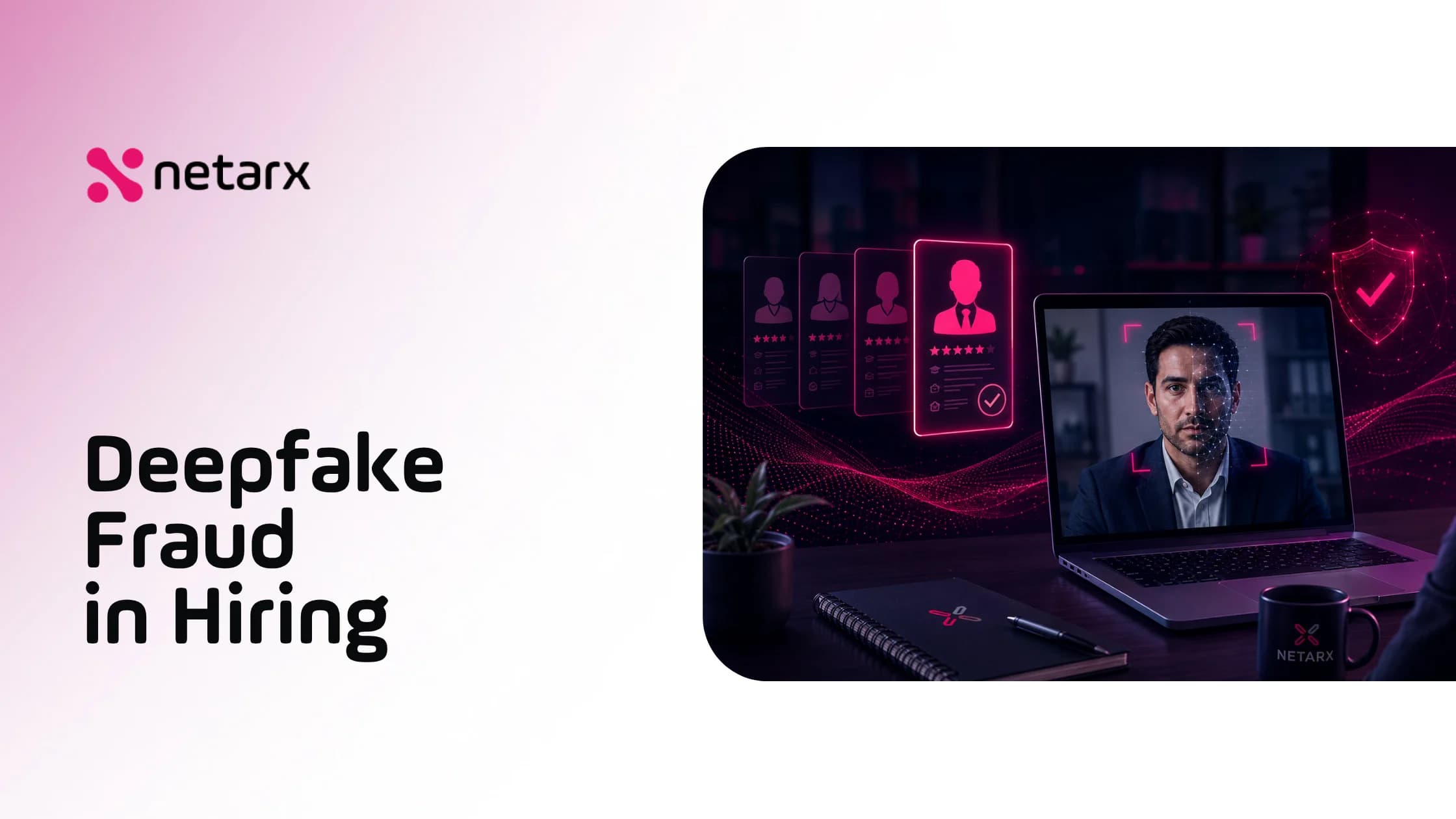
Deepfake fraud in hiring is the use of AI-generated or AI-altered media, a synthetic headshot, a cloned voice, a real-time face swap on a video call, to misrepresent who a job candidate is, in order to win a role, the real person could not obtain under their own identity. The defining feature is not technology.
blog
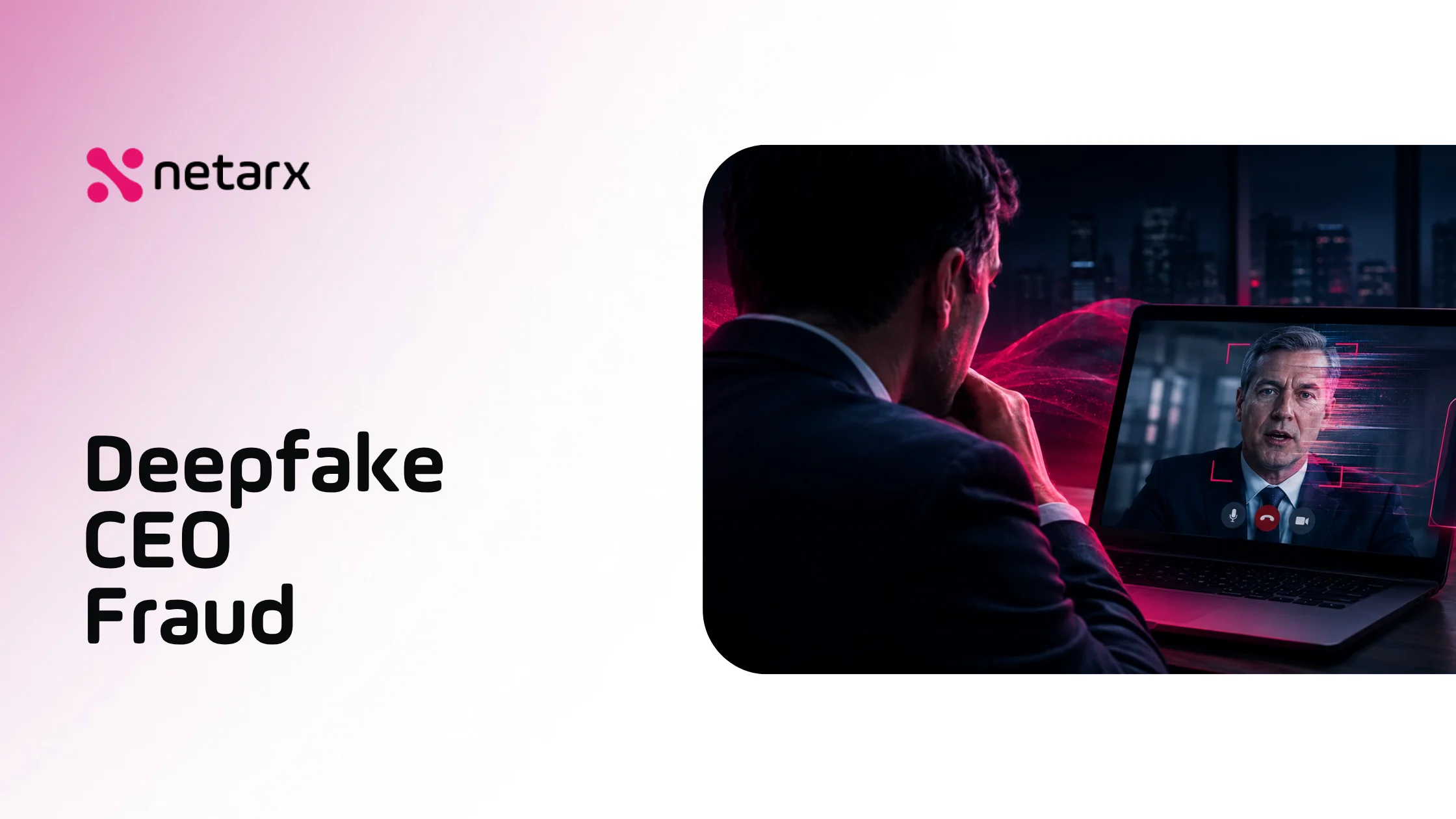
Deepfake CEO fraud is a payment fraud technique in which attackers impersonate a company executive using AI-generated video, cloned voice, or both, then use that fake identity to authorize a fraudulent transfer.
blog
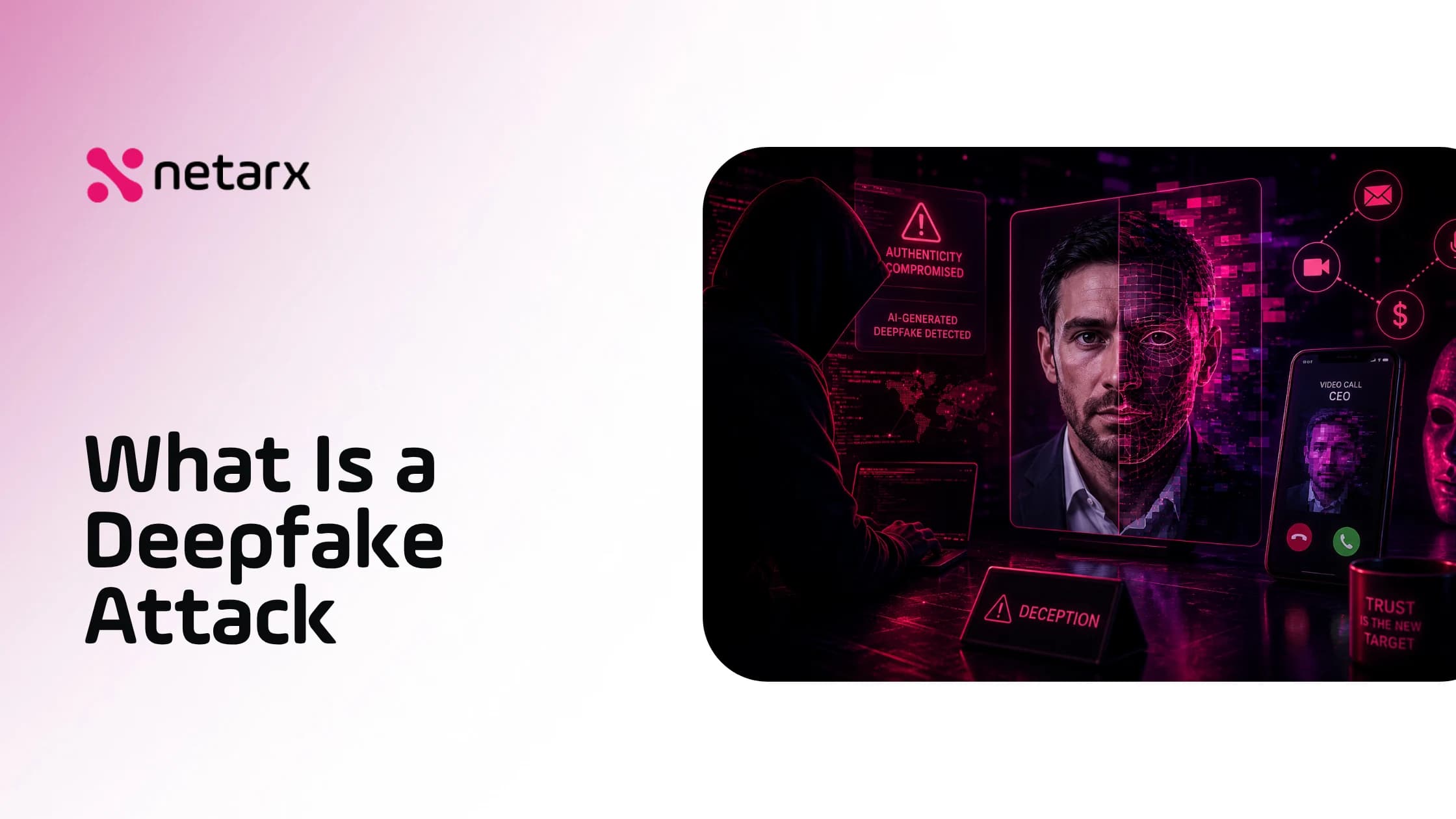
A deepfake attack is a social engineering scam in which criminals use AI-generated video, audio, or images to impersonate a real person, usually an executive, colleague, or vendor, so they can steal money, credentials, or sensitive data.