
Chief Executive Officer
Published: August 14, 2026
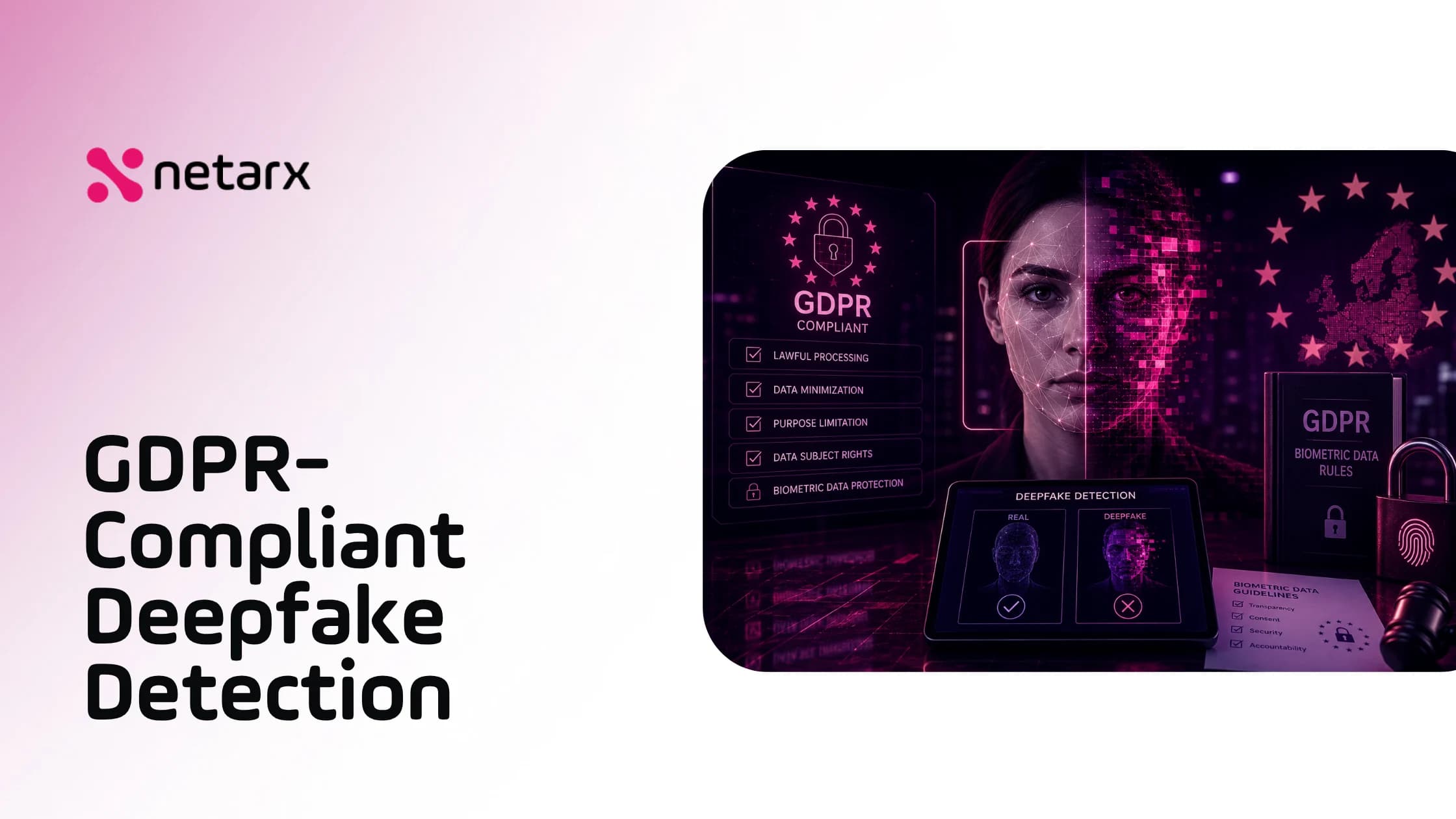
GDPR-compliant deepfake detection means analyzing voice, video, images, and files for AI manipulation without turning that analysis into unlawful biometric processing under Article 9.
Detection is not automatically "biometric data" processing. Recital 51 and Article 4(14) hinge on whether the technical means are used for unique identification. Authenticity scoring is a different purpose than identification.
That distinction is narrowing. Italy's Garante issued a formal warning in December 2025 signaling a broad reading of prohibited biometric processing, and the CJEU has repeatedly interpreted special category data expansively.
The safest architecture is ephemeral: no stored biometric templates, no enrollment database, sub-second inference, results expressed as a confidence signal rather than an identity match.
You still owe a DPIA (Article 35), a documented legal basis (Article 6, usually legitimate interests for fraud prevention), transparency (Articles 12 to 14), and security controls (Article 32).
Since 2 August 2026, EU AI Act Article 50 transparency duties apply alongside GDPR, so detection and disclosure now sit in the same compliance workstream.
GDPR-compliant deepfake detection is the practice of screening communications for AI-generated impersonation in a way that satisfies the GDPR's rules on lawfulness, purpose limitation, data minimization, and special category data. In an enterprise fraud-prevention context that usually means four things: you process facial and vocal signals transiently rather than storing biometric templates, you rely on a documented legal basis such as legitimate interests under Article 6(1)(f), you complete a Data Protection Impact Assessment before go-live, and you keep a human in the decision loop so no one is subject to a solely automated decision under Article 22.
The tension is easy to state. To catch a synthetic CEO on a Zoom call, a detection system has to look closely at a face and a voice. Those are exactly the raw materials the GDPR treats as sensitive when they are used to identify someone. Getting this right is a question of purpose, retention, and documentation, not a question of whether you are allowed to look.

Deepfake detection analyzes faces and voices, but it only becomes Article 9's "biometric processing" when the technical means are used to uniquely identify someone; authenticity classification sits outside that line under the orthodox reading.
Regulators are widening the biometric net: Italy's Garante (Dec 2025), Brazil's ANPD, and CJEU case law all point toward a broader interpretation, so build for the broad reading, not the narrow one.
Legitimate interests under Article 6(1)(f) are the workable legal basis for enterprise fraud prevention; consent is fragile in employment settings due to power imbalance.
A DPIA is effectively mandatory, and it's the first document a supervisory authority will request, starting there.
The defensible architecture is ephemeral: no biometric templates, no enrollment gallery, transient inference, and a human-reviewed confidence signal instead of automated enforcement (which avoids Article 22).
Since 2 August 2026, EU AI Act Article 50 disclosure duties have run alongside GDPR, with fines up to €15M or 3% of turnover. Detection and disclosure are now one compliance workstream.
In vendor selection, two answers determine almost everything: does the system store or match biometric templates, and what is the retention model?
In This Article
Article 4(14) defines biometric data as personal data resulting from specific technical processing of physical, physiological, or behavioral characteristics "which allow or confirm the unique identification" of a person. Recital 51 narrows it further: photographs are not automatically special category data, and only become biometric data when processed through specific technical means allowing unique identification or authentication.
The dominant reading, described well by Privacy Company's analysis of deepfakes and the GDPR, is teleological. It asks what the processing is for. Identification (1:n) and authentication (1:1) trigger Article 9. Classification tasks that do not resolve to an identity generally do not.
Deepfake detection sits on the classification side of that line. The output is "this audio stream shows synthesis artifacts at 94% confidence," not "this is Casey Miller." No gallery of enrolled faces, no identity assertion, no template to match against. On the orthodox reading, that is Article 6 processing of personal data, not Article 9 processing of special category data.
Two caveats matter:
If the detection pipeline also runs facial recognition to confirm the speaker is who they claim to be, you have crossed into Article 9 and need an Article 9(2) condition on top of your Article 6 basis.
If the content itself reveals health, political opinion, religious belief, or sexual orientation, the CJEU has held that inferred sensitive information is special category data regardless of the controller's purpose, and regardless of whether the inference is accurate.
Regulators are pushing toward a broader reading, and buyers should plan for it rather than argue with it.
Italy's Garante, December 2025. The authority issued a formal warning to controllers and processors using AI content generation services built on real voices or images, stating that such processing may infringe Articles 5(1)(a), 6, and 9 absent a lawful condition and transparent information. It is the first European authority to say plainly that voice and image identifiers can fall into the biometric category when the result allows third parties to identify the impersonated person.
A live academic and practitioner thesis. Jorge García Herrero argues in Deepfakes vs GDPR: Prohibited biometric processing? that modern diffusion transformer models use 512-dimensional identity embeddings functionally identical to those used by facial recognition systems like ArcFace and CosFace, and that generation is therefore inverse identification. Notably, he observes that deepfake detection systems use the same technical infrastructure.
Comparative pressure. Illinois BIPA treats face geometry scans derived from photographs as biometric identifiers even though photographs themselves are excluded, which produced Meta's $650 million settlement. Brazil's ANPD Technical Note 1/2026 concluded that synthetic content referring to identifiable people is personal data, and becomes sensitive personal data where biometric data is involved. China's Deep Synthesis Provisions skip the purpose test entirely and regulate biometric feature editing on a harm basis.
Enforcement history on biometrics is not gentle. France's CNIL fined Clearview AI €20 million, Spain's AEPD fined Mercadona €2.52 million for in-store facial recognition, and a Swedish school was penalized for facial recognition attendance tracking where consent was invalid due to power imbalance. GDPR Register's overview of biometric data rules collects the conditions those cases turned on.
The practical implication: build your detection program so it survives the broad interpretation, not just the narrow one.
Whether or not Article 9 applies, these obligations do:
Article 6, lawful basis. Legitimate interests is the workhorse for security tooling, and Recital 47 explicitly contemplates fraud prevention. Document a Legitimate Interests Assessment covering purpose, necessity, and the balancing test. Consent is a poor fit in employment settings because of the power imbalance the Swedish school case turned on.
Article 9(2), condition for special category data. If Article 9 is in scope, explicit consent under 9(2)(a) or substantial public interest under 9(2)(g) as specified in national law are the realistic routes. Note that some member states have enacted biometric provisions under 9(2)(g) covering authentication and security.
Article 5(1)(b) and (c), purpose limitation and data minimization. Detection results should not quietly become an HR performance dataset. Restrict the purpose in writing, and process the smallest possible slice of content for the shortest possible time.
Article 25, data protection by design. Choose the least intrusive architecture that achieves the outcome. Transient inference beats template storage. Edge or in-session analysis beats bulk upload.
Article 32, security of processing. Encryption in transit and at rest, role-based access control, MFA on the console, key management, and pseudonymization of any retained artifacts.
Article 35, DPIA. Biometric-adjacent processing of employee and counterparty communications at scale is high risk on its face. A DPIA is not optional here, and it is the document a supervisory authority will ask for first.
Articles 12 to 14, transparency. Employees and, where applicable, external meeting participants need to know detection is running, on what basis, and for how long anything is kept. Update the internal privacy notice and the meeting-join language.
Article 22, automated decisions. If a red flag automatically blocks a payment or locks an account, you may be making a solely automated decision with significant effects. A confidence indicator that prompts a human to verify avoids the problem, which is one reason nudge-style interfaces are easier to defend than hard blocks.
Chapter V, international transfers. Confirm where inference happens and where logs land. EU data residency is the cleanest answer for EU-heavy deployments.
Articles 33 and 34, breach notification. This is where detection earns its keep. The 72-hour clock starts when you become aware of a breach, and AI-driven social engineering is designed to stay invisible. Netarx's GDPR solution page covers how real-time alerting supports that deadline.
Legitimate interests, Art. 6(1)(f) | Explicit consent, Art. 9(2)(a) / 6(1)(a) | |
|---|---|---|
Best fit | Enterprise fraud prevention, security monitoring | Consumer-facing verification, voluntary features |
Employee context | Workable with an LIA and transparency | Fragile, power imbalance undermines freely given consent |
Documentation | Legitimate Interests Assessment plus DPIA | Consent records, granular capture, withdrawal mechanism |
Failure mode | Balancing test challenged as disproportionate | Consent found invalid, processing has no basis at all |
Covers Art. 9 data? | No, needs an Art. 9(2) condition alongside | Yes |
GDPR is no longer the only instrument in play. Since 2 August 2026, the transparency obligations in EU AI Act Article 50 are live, requiring that deepfake content be disclosed as artificially generated or manipulated. Non-compliance carries fines up to €15 million or 3% of worldwide annual turnover, and prohibited practices reach €35 million or 7%. Separately, the Act restricts biometric categorisation systems that infer sensitive attributes and prohibits emotion recognition in workplaces and educational settings, which is a real constraint on vendors that market "stress detection" or "sentiment analysis" alongside authenticity scoring.
Read the two regimes together. GDPR asks whether you may process the face and voice. The AI Act asks whether the content was labeled and whether your system's inference outputs are permitted at all. Our breakdown of EU AI Act Article 50 deepfake compliance goes into the disclosure mechanics in detail.
Bring these to any procurement conversation about GDPR-compliant deepfake detection:
Do you create, store, or reuse biometric templates or identity embeddings? If yes, for how long and under what basis?
Is inference transient and in-session, or is content uploaded and retained? What is the retention period for raw media, derived features, and detection logs?
Where is processing physically performed, and can you guarantee EU residency?
Does the product perform identification or authentication of the speaker, or only authenticity classification? Get this in writing, because it determines whether Article 9 applies.
Does the system infer emotion, stress, or sensitive attributes? If so, how do you handle the AI Act restrictions?
Will you supply a DPIA support pack, a records of processing activities entry, and a signed Article 28 processor agreement with a sub-processor list?
Is the output a human-reviewable signal, or an automated enforcement action? Ask how Article 22 exposure is managed.
What is the false positive rate, and what recourse does a wrongly flagged individual have? Article 5(1)(d) accuracy and Article 21 objection rights both bite here.
No enrollment, no gallery. A system with nothing to match against cannot perform 1:n identification, which is the cleanest way to stay outside Article 9.
Ephemeral inference. Analyze, score, discard. Sub-second detection windows minimize both data volume and retention exposure.
Confidence signals over verdicts. A simple green, yellow, red indicator surfaced inside the existing workflow keeps a person accountable for the decision. This is how the Netarx Identity Key is built, precisely because it nudges rather than adjudicates.
Cross-channel coverage, single purpose. Attackers move across video, voice, SMS, email, and attachments in one campaign, so coverage needs breadth. Purpose, however, should stay narrow and written down.
Federated validation. Distributing trust signals reduces single points of failure without centralizing a biometric honeypot.
Evidence trail. Keep the DPIA, LIA, RoPA entry, transparency notice, and vendor DPA in one place. Accountability under Article 5(2) is a documentation obligation as much as a technical one.
GDPR-compliant deepfake detection is achievable, and the compliance risk sits mostly in architecture and paperwork rather than in the act of detection itself. Systems that store biometric templates, perform identification, infer emotion, or automate enforcement carry real Article 9 and AI Act exposure. Systems that analyze transiently, score authenticity, keep nothing, and hand the decision to a human are defensible under both the narrow and the broad reading of Article 9, which is the standard to build to given where regulators are heading.
If you are evaluating detection now, start with the DPIA and the vendor's retention model. Everything else follows from those two answers.
SOURCES & REFERENCES

 Verified
Chief Executive Officer
CEO/Founder of Netarx LLC, Real-time detection of deepfake and social engineering threats via enterprise video, voice and email. Managing Partner of Koach Capital, a Private Equity firm managing a multitude of commercial real estate (CRE) funds whose focus is retail sale-leasebacks. Sandy's entrepreneurial success began by founding a network integration and services provider that served large enterprises. We focused on advanced technologies including Business Intelligence (BI), Network & Information Security, Virtualization, Storage Area Networks, Unified Communications and Data Center Services. In 2009, Netarx acquired the VAR business of Analysts International (including Sequoia and Entree Systems). In 2011 Netarx was acquired by Logicalis (a division of Datatec - Symbol LSE: DTC) and stayed on as its Chief Technology Officer. He continued to build by founding Verge.io (Formerly Yottabyte) and Service.com. Also, Sandy served as a General Partner of Ludlow Ventures, a venture capital fund focusing on investments in early-stage tech companies. Sandy contributes to the community via lectures, publications and developing new technologies - he currently holds 8 Patents.

Usually not. Enterprise fraud prevention typically rests on legitimate interests under Article 6(1)(f), supported by a Legitimate Interests Assessment and clear transparency. Explicit consent becomes necessary if the processing genuinely falls under Article 9, for example because the system also performs facial recognition, or because detection outputs reveal special category information.
blog
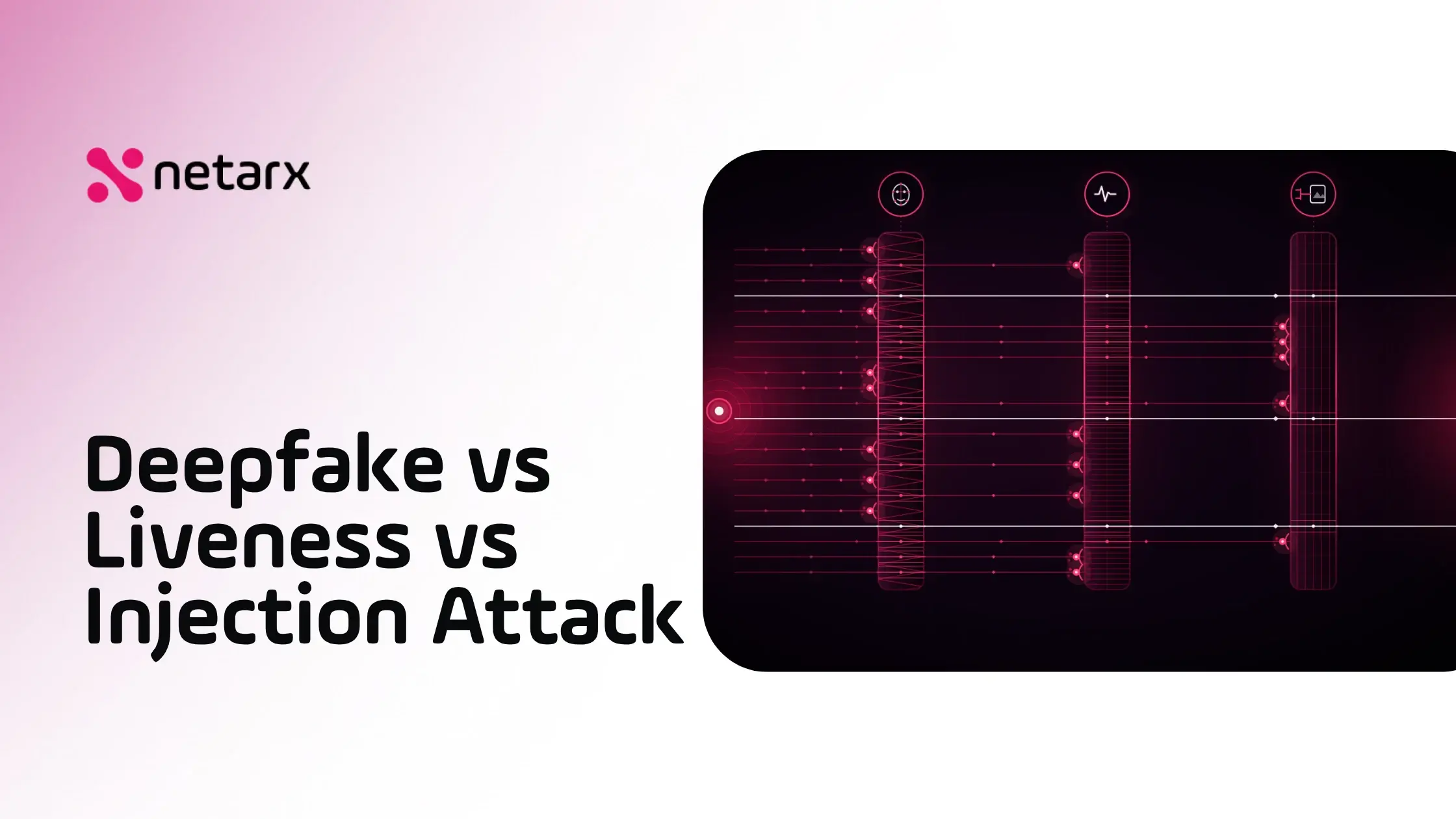
Deepfake detection asks whether media is synthetic or manipulated. It catches AI faces and cloned voices, but can miss high quality fakes and says nothing about who is really on the other end.
blog
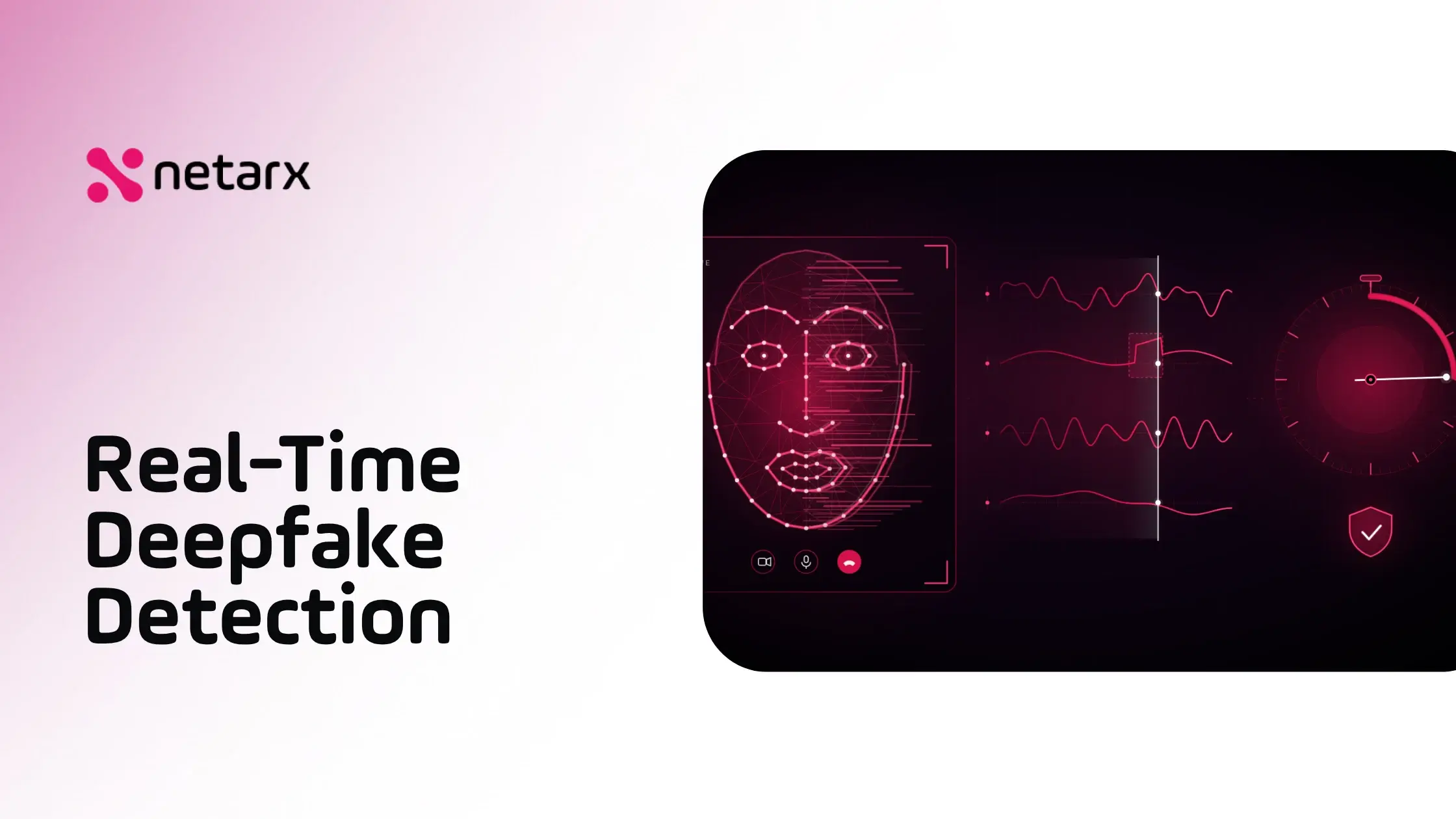
Real-time deepfake detection analyzes live video, voice and messages as they happen and returns a trust verdict while the conversation is still in progress, before anyone acts on a fraudulent request. It works by streaming short windows of media and context through several models at once: visual forensics, audio forensics, metadata and device checks, and behavioral signals, then fusing them into one verdict.

blog
AI impersonation fraud uses cloned voices, deepfake video and AI-written messages to pose as executives, vendors or candidates. It is mainstream: 62% of organizations saw a deepfake attack in the past year (Gartner, 2025).