
Chief Executive Officer
Published: August 20, 2026
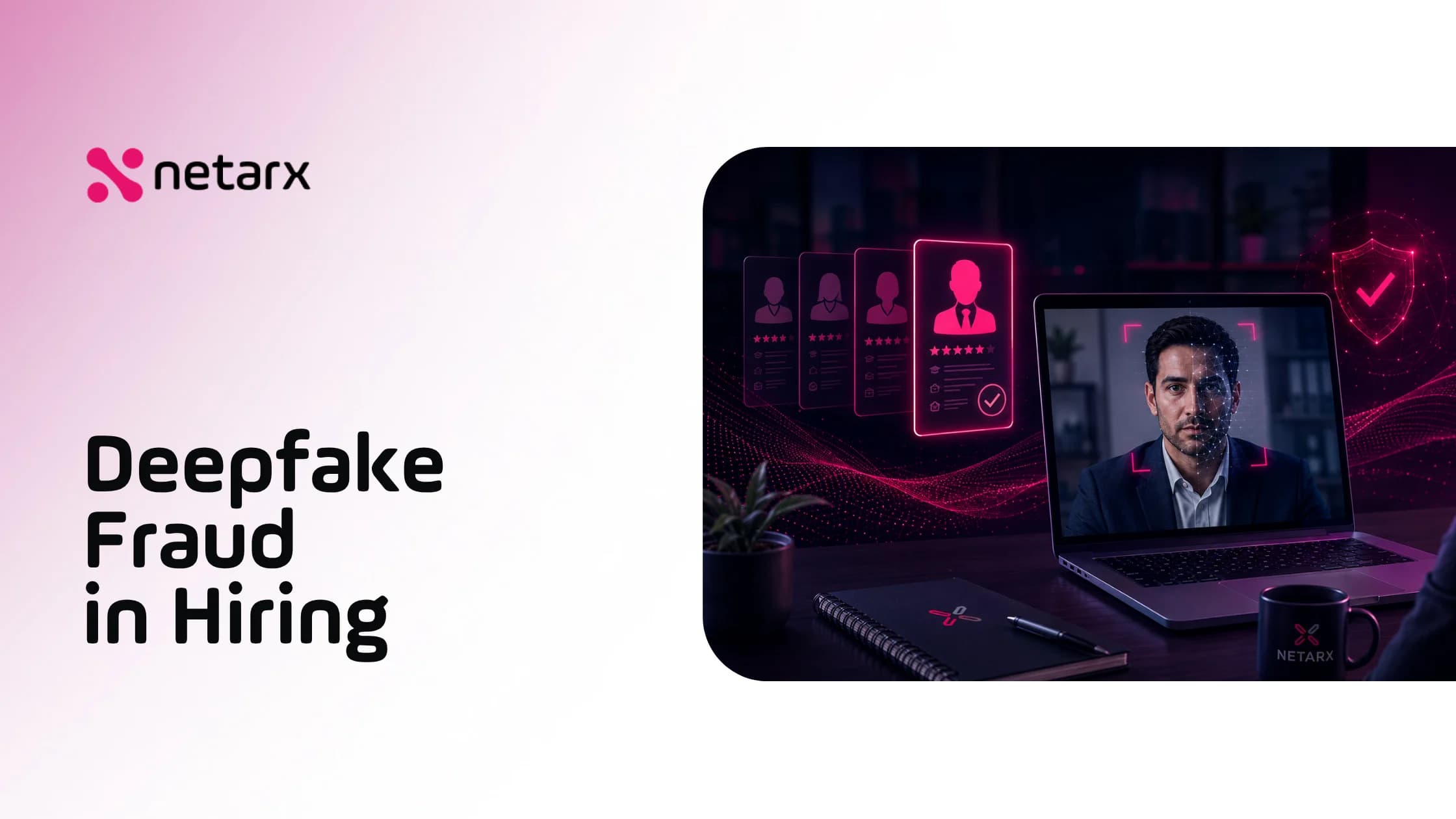
Deepfake fraud in hiring is no longer a fringe scenario. Applicants are using AI-generated headshots, cloned voices, and real-time face swaps on video calls to win remote roles, collect salaries, and in some cases plant malware on day one. Gartner expects one in four candidate profiles worldwide to be fake by 2028. Background checks do not solve this, because a stolen but valid identity passes them cleanly.
What works instead is layered verification: government ID plus liveness checks early in the funnel, live interview probes that synthetic video still struggles with, device and network signals that expose laptop farms and virtual cameras, and real-time deepfake detection running on the actual video and voice channel. HR cannot own this alone. Recruiting, IT, and security need one shared process with a defined escalation path.
Deepfake fraud in hiring is the use of AI-generated or AI-altered media, a synthetic headshot, a cloned voice, a real-time face swap on a video call, to misrepresent who a job candidate is, in order to win a role, the real person could not obtain under their own identity. The defining feature is not technology.
It is that the identity itself is fabricated or stolen, and the video and audio exist to hold that identity together under live scrutiny. It is worth separating from three things it gets grouped with, because each one calls for a different response.
Résumé fraud is lying about what you did. Deepfake fraud lies about who you are. Background screening was built for the first problem and is structurally poor at the second.
AI-assisted interview cheating is a real candidate using an LLM to compose answers in real time. It is a hiring-quality problem, and it may be grounded for disqualification, but the person on the call is the person you would be employing.
Proxy interviewing is a human stand-in taking the interview for someone else. Same objective, no synthetic layer. It is often the first stage of the same operation, and it is the reason a second interview with a different interviewer catches so much.
Motive determines what you actually lose. At one end, the goal is simply a salary, sometimes several salaries drawn from several employers at once by one operator. At the other end, the applicant is a state-sponsored operative, and the job is the delivery mechanism: the laptop arrives, remote access software goes on, and the compensation package is the least expensive part of the incident.
One note on the term. "Deepfake" suggests video, and video is where the fraud is most visible. But most of these operations are already well advanced before anyone joins a call; the identity was purchased, the résumé was generated, the headshot was synthesised, and the LinkedIn profile was seeded months earlier. If you assess your own exposure by asking whether your interviewers could spot a fake face, you are looking at the last checkpoint and ignoring the four before it.

How deepfake fraud in hiring actually works, from fabricated résumé to first-day network access
The current numbers on fake candidates, AI interview fraud, and detection gaps
Why a company that trains people to spot social engineering still hired a fake employee
Where standard HR screening breaks, including the background check blind spot
Red flags recruiters can watch for in a live video interview, and which ones no longer work
A stage-by-stage verification playbook covering application, interview, offer, and onboarding
How to tighten verification without treating honest candidates like suspects
FAQs on legality, cost, and which roles need the strictest checks
In This Article
The stereotype is a glitchy face on a Zoom call. The reality starts much earlier and runs much longer.
A typical operation builds a complete person before anyone applies. The fraudster starts with a stolen or purchased identity belonging to a real citizen, which is what makes downstream checks come back clean. Generative tools then produce a polished résumé tuned to the job description, a headshot that either comes from a stock photo with AI modifications or from a model that has never existed, and a LinkedIn profile with a plausible work history and a few connections seeded over time.
The interview is where the AI shows up live. Real-time video inference maps a face onto the operative's webcam feed and routes it through a virtual camera driver, which conferencing platforms treat like any other webcam. Voice changers and cloning handle the audio. A VPN or a US-based "laptop farm" makes the traffic look domestic, which is why so many of these hires appear to be sitting in an apartment in Ohio.
Then there is the part HR rarely sees. Once hired, the goal splits. Some operators just want the paycheck, sometimes several paychecks from several employers at once. Others want what the badge unlocks: source code, customer data, credentials, or a foothold to ransom later. The FBI has documented the North Korean IT worker scheme at length, including the use of witting and unwitting US residents to receive company laptops on the operative's behalf.
If you want the broader pattern this fits into, our breakdown of impersonation attacks in cybersecurity covers how the same playbook targets finance, executives, and vendor relationships.
The forecasts get quoted constantly, so here are the ones with real research behind them.
Gartner projects that one in four candidate profiles worldwide will be fake by 2028. In the same body of research, 6% of 3,000 surveyed job seekers admitted to interview fraud, meaning they either impersonated someone else or had someone else sit the interview for them. Self-reported cheating is almost always undercounted, so treat 6% as a floor rather than a ceiling.
On the employer side, roughly 17% of 1,000 US hiring managers surveyed by Resume Genius said they had run into candidates using deepfake technology in video interviews. Pindrop, a voice authentication vendor that publicly caught a deepfake applicant of its own, reported deepfake attempts in hiring rising by around 1,300% year over year in its Voice Intelligence Report.
The detection side has not kept pace. Survey work across HR professionals in 2025 found that fewer than a third of companies run any deepfake detection software, and close to half of HR staff had received no training at all on AI-driven hiring fraud. For a wider view of how these threats are trending across channels, see our roundup of deepfake statistics for 2026.
One more data point worth sitting with: in 2026, eleven allied governments issued a joint advisory describing North Korean operatives using real-time deepfake video specifically to defeat live hiring screens. That is not a prediction. That is a documented technique with sentencings attached.
In July 2024, KnowBe4, a security awareness training company, hired a principal software engineer for its internal AI team. The process was not sloppy. Résumé screening, four separate video interviews on four separate days, background checks, reference verification. Everything came back clean, and in each interview the person on camera matched the headshot on the application.
Twenty five minutes after the company laptop was delivered and powered on, endpoint detection started firing. The new hire was a North Korean operative using a stolen but valid US identity and an AI-modified stock photo. KnowBe4 published the whole incident rather than burying it, which is the only reason the rest of us can learn from it.
The lesson is not that KnowBe4 was careless. It is that a hiring process can look thorough on paper and still have never been tested against an adversary built specifically to pass it.
Four gaps show up over and over.
A background check answers whether a person is safe to hire. It does not answer whether the person in the interview is the person on the paperwork. When the underlying identity is real and stolen, a clean result just confirms that the fraud is well constructed.
Most identity confirmation waits until the offer stage or onboarding, after the team has already spent a dozen interview hours and formed an opinion. By then there is momentum, and momentum makes people explain away anomalies.
Seeing a face used to be strong evidence. Real-time face swap tools have quietly removed that assumption, and the older manual tests are aging fast. The "hold up three fingers and wave a hand in front of your face" trick still catches low-effort fakes, but current models increasingly render occlusion without breaking. Treat it as one cheap signal, not as clearance.
Recruiting notices something odd, mentions it in passing, and moves on because there is no defined path to escalate. Security never hears about it until the EDR alert fires.
None of these is proof on its own. Clusters are what matter.
In the live interview, watch for lip-sync drift that gets worse when the candidate speaks quickly, eyes that stay strangely fixed or reflect light in a way that does not match the room, lighting on the face that disagrees with the background, warping or blur along the hairline and jaw when the head turns, and audio that sounds studio-clean while the video suggests a normal home setup. Our guide on how to spot a deepfake on a video call breaks down each of these with more detail across Zoom, Teams, Meet, and Webex.
Behavioral signals are often stronger than visual ones. Persistent refusal to turn the camera on, or a camera that fails only during the technical portion of the interview. Answers that arrive after an unnatural pause and then sound written rather than spoken. A candidate who cannot discuss specifics of a project listed on their own résumé. A name, email domain, LinkedIn history, and stated location that do not quite line up. Requests to ship equipment to an address that changes between offer and start date, which is one of the FBI's explicitly listed indicators.
Think of hiring as a security perimeter with four checkpoints rather than one gate.
Require government ID verification with liveness detection at the pre-screen stage, handled by a verification platform and framed as standard onboarding rather than an accusation. Cross-check the résumé against the LinkedIn history, email domain, and stated location for consistency. State plainly in the job posting what AI use is acceptable during the process and what is not, because clear rules deter opportunists and give you grounds to disqualify later.
Run at least one unscheduled follow-up conversation with a different interviewer, since fraud rings often rotate the person on camera. Ask questions that require recall rather than research: specifics of a project, the name of a manager, why a particular technical decision was made. Watch for a mismatch between résumé seniority and live fluency.
Use real-time detection on the call itself instead of relying on human eyes. Netarx analyzes voice, video, and identity signals during the meeting and surfaces a simple traffic-light indicator to the interviewer, so a recruiter does not need to be a forensics expert to know something is off.
Confirm the address on file has not changed since the interview stage. Verify tax and banking details against the verified identity, not against candidate-supplied documents alone. For sensitive roles, require one in-person or notarized identity step before system access is granted. Ship equipment only to a verified address, and treat any request to redirect it as an escalation trigger, not a logistics question.
Give new hires least-privilege access during onboarding. Monitor for remote desktop tooling, unusual VPN patterns, and geolocation that contradicts the stated work location during the first weeks. Identity assurance is not a checkpoint that ends at hire, which is the argument behind our tiers of identity model.
The common objection is that heavy verification makes a company look paranoid and costs it good applicants. The evidence points the other way. Gartner's research found that candidates are more likely to apply to roles that include in-person interview steps, and honest applicants generally read verification as a sign that the employer is serious about who it hires.
A few practical guardrails. Tell candidates upfront, in the job posting and the interview invitation, that identity verification is part of the process. Apply it uniformly to every candidate for a given role rather than selectively, which is both fairer and safer from a discrimination standpoint. Keep biometric data handling compliant with the rules that apply to you, including BIPA in Illinois, GDPR if you hire in the EU, and state biometric privacy laws elsewhere. Give candidates a documented way to resolve a false flag, because detection tools produce false positives and a person should never lose an offer to an unreviewed alert.
Legal exposure is starting to move too. Firms that inadvertently hire sanctioned workers have so far been treated as victims, but enforcement guidance increasingly signals that a deficient compliance program is its own risk. Our page on deepfake defense for HR and people teams covers how this maps to recruiting workflows.
Deepfake fraud in hiring succeeds because it targets the one part of the process built on human trust. A recruiter's job is to believe people. An attacker's job is to be believable.
Netarx closes that gap with real-time deepfake detection across voice, video, email, SMS, images, and identity, correlating over 1,000 metadata signals to expose the inconsistencies that single-channel tools miss. Interviewers see a clear traffic-light signal inside the tools they already use, with no new workflow to learn and nothing for HR to install on a candidate's machine.
Two ways to start:
Book a demo to see how Netarx flags a synthetic candidate during a live interview.
Try Defrag free, a two-minute test that spins up a deepfake of your own executive and shows you whether your team can spot it. No credit card required.
Your hiring funnel is a security perimeter now. Verify it like one.
SOURCES & REFERENCES
HR Dive — "By 2028, 1 in 4 candidate profiles will be fake, Gartner predicts", July 2025. Gartner's 2028 projection; a 2Q25 Gartner survey of 3,000 job candidates in which 6% admitted to interview fraud; and the finding that 62% of candidates are more likely to apply to a role that includes in-person interview steps.
CNBC — "How deepfake AI job applicants are stealing remote work", 11 July 2025. Resume Genius survey of 1,000 US hiring managers: 17% reported encountering candidates using deepfake technology to alter video interviews.
FBI — Public Service Announcement I-072325-4-PSA, "North Korean IT Worker Threats to U.S. Businesses", 23 July 2025. Documents the use of witting and unwitting US-based facilitators to receive company laptops, enable domestic internet connections and install remote desktop software. Also the source for the shipping-address control and the hand-wave prompt.

 Verified
Chief Executive Officer
CEO/Founder of Netarx LLC, Real-time detection of deepfake and social engineering threats via enterprise video, voice and email. Managing Partner of Koach Capital, a Private Equity firm managing a multitude of commercial real estate (CRE) funds whose focus is retail sale-leasebacks. Sandy's entrepreneurial success began by founding a network integration and services provider that served large enterprises. We focused on advanced technologies including Business Intelligence (BI), Network & Information Security, Virtualization, Storage Area Networks, Unified Communications and Data Center Services. In 2009, Netarx acquired the VAR business of Analysts International (including Sequoia and Entree Systems). In 2011 Netarx was acquired by Logicalis (a division of Datatec - Symbol LSE: DTC) and stayed on as its Chief Technology Officer. He continued to build by founding Verge.io (Formerly Yottabyte) and Service.com. Also, Sandy served as a General Partner of Ludlow Ventures, a venture capital fund focusing on investments in early-stage tech companies. Sandy contributes to the community via lectures, publications and developing new technologies - he currently holds 8 Patents.

Common enough to plan around. Roughly a third of hiring professionals in recent surveys report having interviewed someone they suspected or confirmed was using deepfake technology, and Gartner's 2028 projection puts fake profiles at one in four globally.
blog
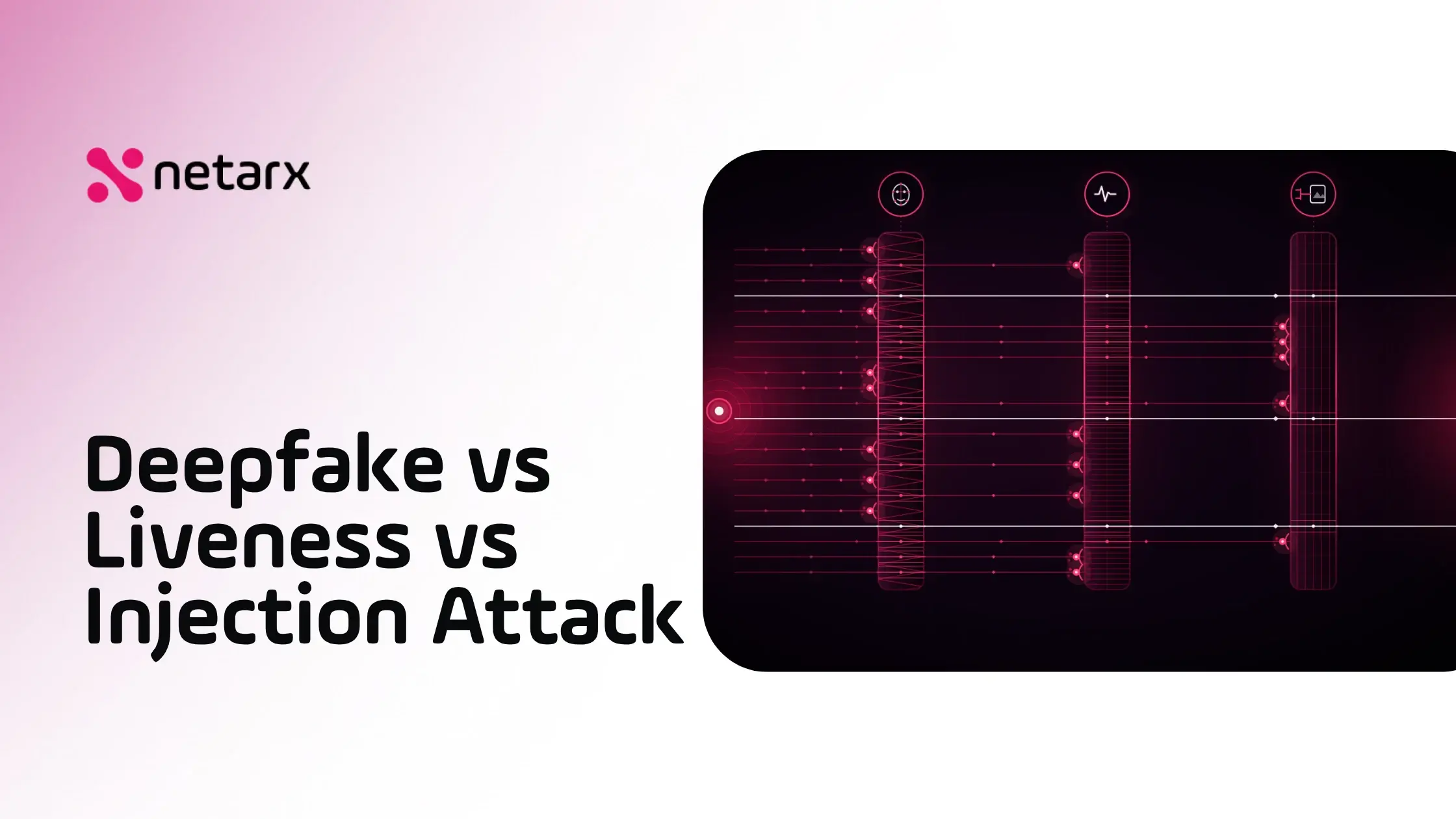
Deepfake detection asks whether media is synthetic or manipulated. It catches AI faces and cloned voices, but can miss high quality fakes and says nothing about who is really on the other end.
blog
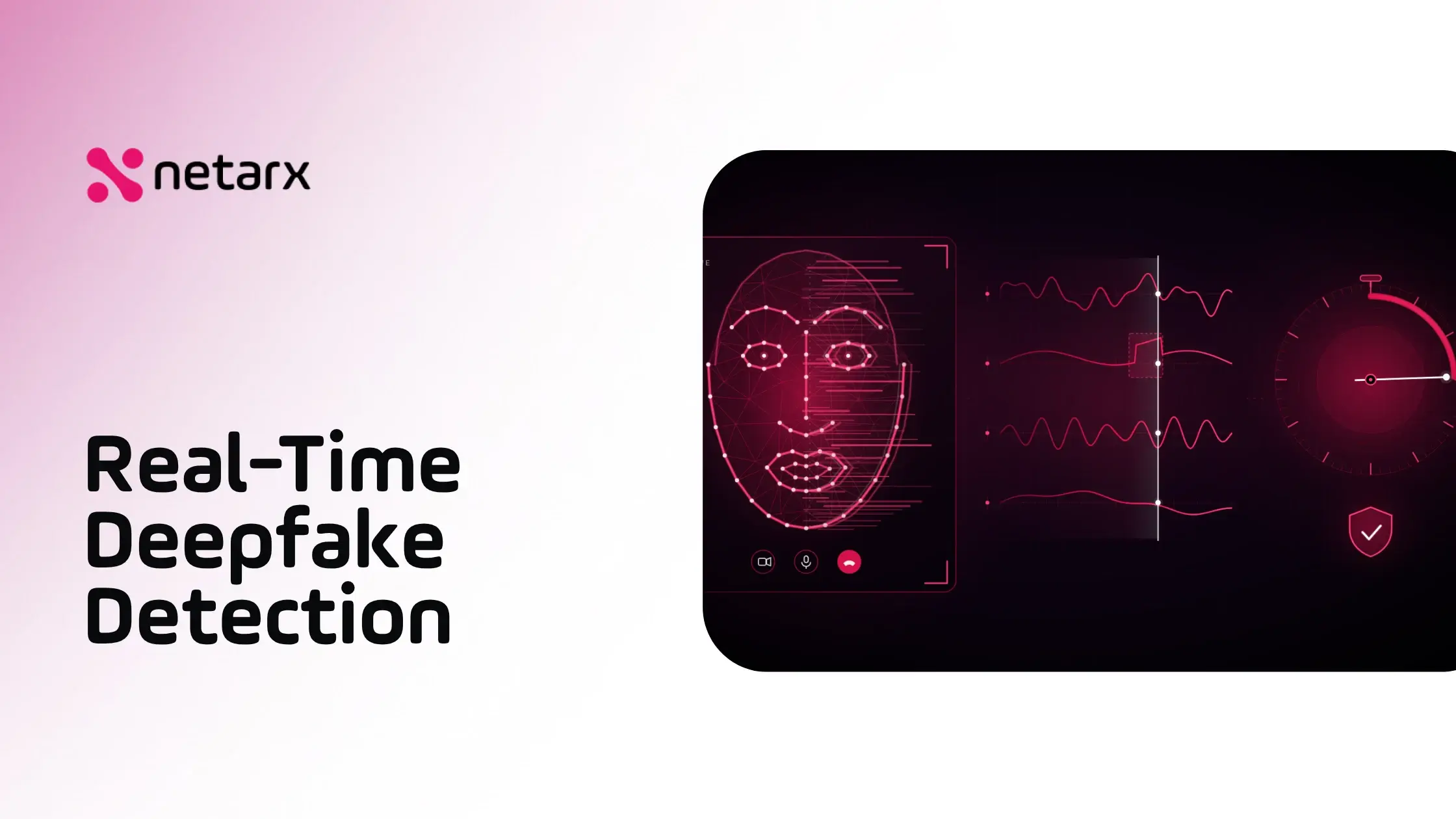
Real-time deepfake detection analyzes live video, voice and messages as they happen and returns a trust verdict while the conversation is still in progress, before anyone acts on a fraudulent request. It works by streaming short windows of media and context through several models at once: visual forensics, audio forensics, metadata and device checks, and behavioral signals, then fusing them into one verdict.
blog
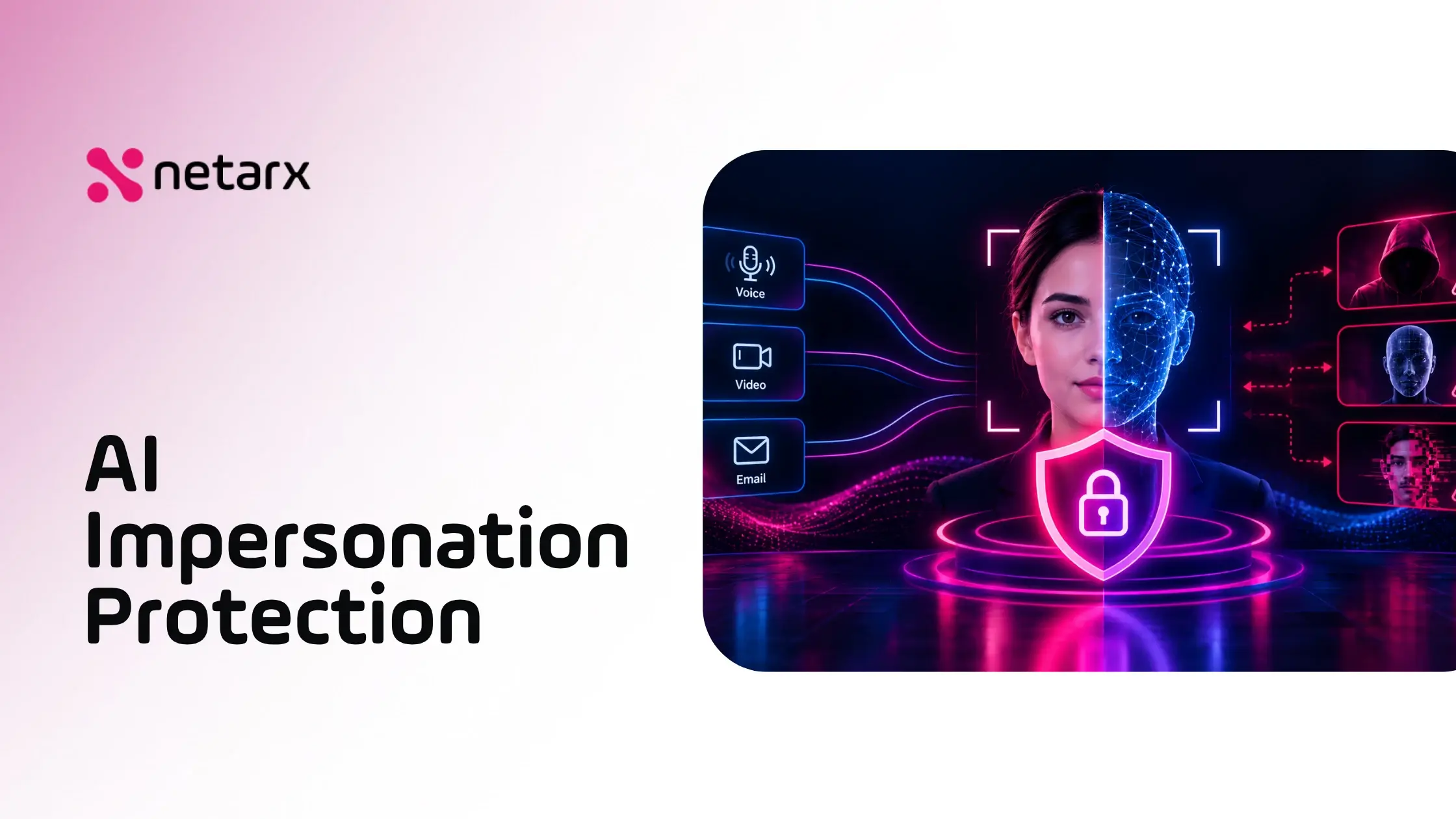
AI impersonation fraud uses cloned voices, deepfake video and AI-written messages to pose as executives, vendors or candidates. It is mainstream: 62% of organizations saw a deepfake attack in the past year (Gartner, 2025).