
Chief Executive Officer
Published: June 24, 2026
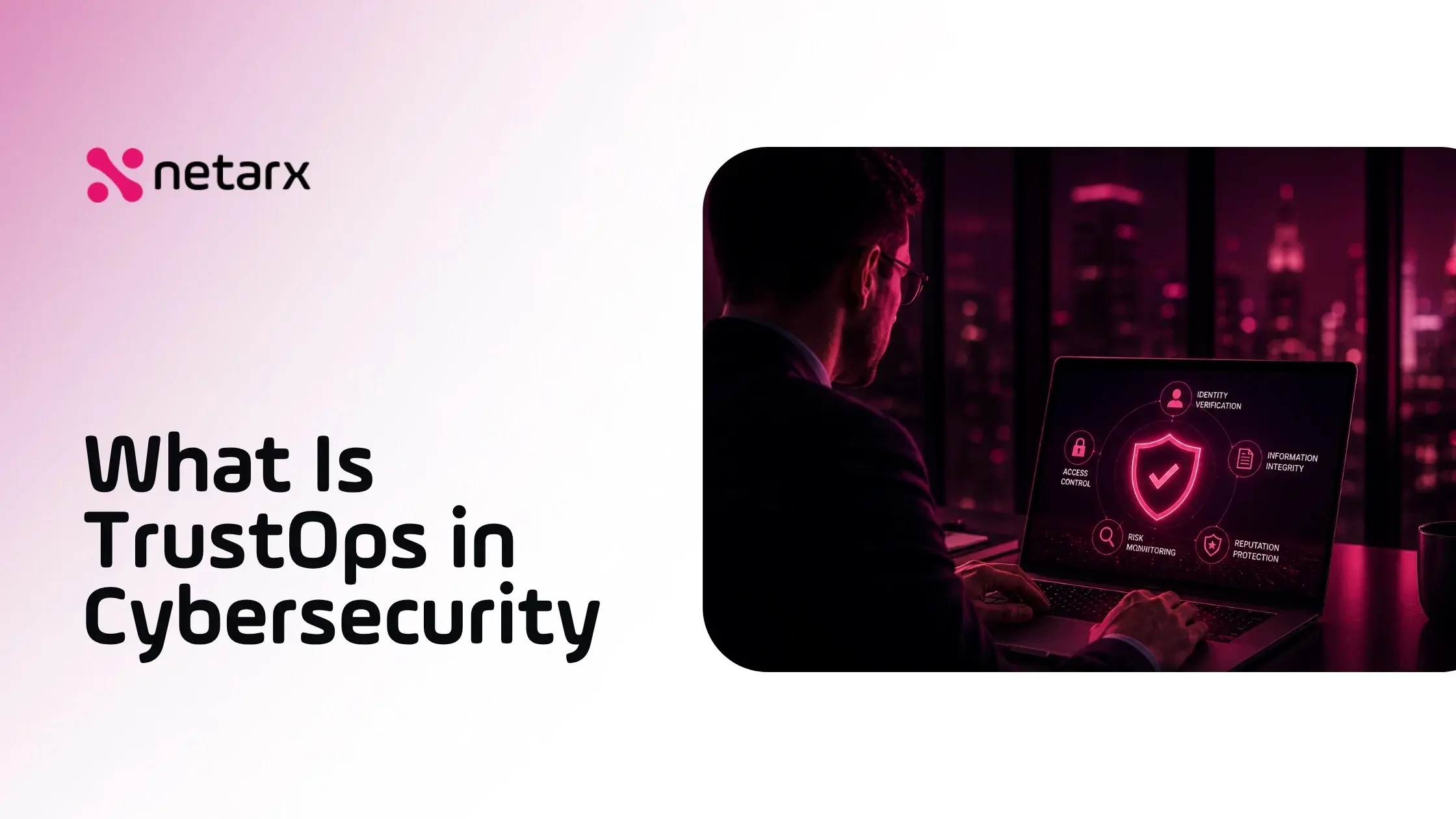
TrustOps, or trust operations, is a strategic discipline for protecting an organization's trustworthiness, reputation, and information integrity, and digital identity verification is its foundation. As generative AI makes it possible to fake a voice, a face, or a document in real time, organizations can no longer assume that a familiar person on a call or an authenticated login is genuine. TrustOps closes that gap by combining real-time detection, strong digital identity verification, and cross-functional governance. This guide explains what TrustOps is, why it matters now, and how digital identity verification anchors the whole model.
TrustOps is a holistic approach to enhancing organizational trustworthiness and transparency while mitigating the risks of disinformation, impersonation, and harmful associations. It encompasses the governance frameworks, processes, and tools an organization uses to control the information it consumes and produces, and to verify the authenticity of the people and content it interacts with.
The term was popularized by Gartner, which frames TrustOps as a response to a world where misinformation and AI-generated content undermine the integrity of everyday business communications. Crucially, Gartner positions TrustOps as a new capability category rather than a feature bolted onto an existing security or compliance program.
At a practical level, TrustOps does three things: it grounds inbound information so decisions are based on accurate inputs, it certifies outbound information so the organization publishes accurate content, and it verifies the identities behind interactions so that trust is earned rather than assumed.

TrustOps is a dedicated capability category, not an extension of traditional cybersecurity or governance, risk, and compliance (GRC).
Digital identity verification is the operational core of TrustOps: if you cannot confirm who you are dealing with, no other control holds.
The threat is already here. The human element is present in 62% of breaches, per the Verizon 2026 Data Breach Investigations Report, and AI has made impersonation cheap and convincing.
Identity verification is shifting from a one-time check at login toward continuous verification that runs throughout an interaction.
A TrustOps program needs three things: detection and verification technology, reputation management, and a cross-functional Trust Council to govern it.
In This Article
The short answer is that AI has broken the assumptions enterprise security was built on. Gartner's summary is blunt: organizations have reached a point where you can no longer trust anything on your screen.
Traditional security protects systems and data from unauthorized access. It is not designed to answer a different and now urgent question: is the person on this video call actually who they appear to be? A SIEM alert cannot detect a deepfake CFO. Endpoint protection does not flag a voice-cloned executive authorizing a wire transfer. The entire architecture of conventional security is orthogonal to this class of attack.
The data underscores the urgency. The human element appears in 62% of breaches. Social engineering is among the most common breach patterns. And the cost of a convincing impersonation has fallen to the price of a laptop and a free API key. TrustOps exists because the attack surface that matters most, human trust, has been left structurally undefended.
It helps to see TrustOps alongside the disciplines it complements rather than replaces.
Discipline | Core question | Primary focus |
|---|---|---|
Traditional cybersecurity | Is our infrastructure protected? | Systems, networks, endpoints, and data |
Governance, risk, and compliance (GRC) | Are we meeting our obligations? | Policy, audit, and regulatory adherence |
TrustOps | Are we meeting our obligations? | Information integrity and digital identity verification |
TrustOps sits on top of these functions and connects them. It depends on cybersecurity tooling, aligns with GRC obligations, and adds the missing layer: verifying authenticity in real time.
A practical TrustOps program spans three capability domains.
This is where digital identity verification lives. It includes real-time deepfake detection in meeting platforms, strong user authentication, identity assurance for high-risk processes such as account recovery and wire authorization, and dynamic security awareness training. The goal is to protect employees from being manipulated during live interactions.
This domain covers narrative intelligence to track and counter malicious campaigns about the brand or its executives, content provenance standards such as C2PA, and executive protection. The goal is to defend the organization's reputation in the wider information ecosystem.
This is the Trust Council: a cross-functional body that owns policy, accountability, threat monitoring, and education across the enterprise. Without it, the function stays fragmented and underfunded.
Digital identity verification is the process of confirming that a person is who they claim to be in a digital interaction, before granting trust, access, or the ability to act. It is the operational core of TrustOps, because every other control depends on knowing who is on the other end.
Frameworks such as the NIST SP 800-63 Digital Identity Guidelines formalize this into assurance levels covering identity proofing, authentication, and federation. The higher the risk of an interaction, the higher the assurance an organization should require before trusting it.
Two points make digital identity verification harder than it used to be. First, attackers now defeat surface-level checks with deepfakes and synthetic media, so verification must look at deeper signals such as device identity, metadata, and behavioral patterns, not just a face or a voice. Second, trust is not static. A person who was verified at login can still be coerced, spoofed, or impersonated mid-session.
The traditional model verifies identity once, at the start of a session, and then assumes it holds. That assumption no longer survives contact with modern attacks.
Continuous identity verification, sometimes described as biometric continuous identity assurance, runs in the background throughout an interaction. It repeatedly evaluates signals to detect anomalies that indicate impersonation, and it can trigger automated responses if trust drops. This shift, from a single gate to a continuous assurance layer, is the direction digital identity verification is heading, driven directly by the rise of deepfake and AI-enabled attacks.
For high-value processes, this matters enormously. A bank-grade onboarding check at account opening does nothing to protect a wire transfer authorized three months later on a deepfake video call. Continuous verification is what closes that window.
A Trust Council is the cross-functional governance body that owns TrustOps. Gartner is explicit that disinformation security stays ineffective until an organization establishes TrustOps as a dedicated discipline with this kind of governance in place.
The reason is accountability. Deepfake attacks on employees are a CISO and CIO concern. Disinformation targeting brand and executives is a CMO and CCO concern. Regulatory and reputational exposure is a board concern. TrustOps is the only framework that spans all three, and the Trust Council is where ownership is assigned.
Recommended practices for a Trust Council include:
Limit membership to roughly eight to 10 participants, with representation from risk and compliance, IT and cybersecurity, legal, corporate communications, and product.
Define clear policies for consuming and publishing information, plus mechanisms to detect and act on disinformation.
Run antifragility exercises that simulate disinformation and impersonation incidents, much like ethical hacking and phishing simulations.
Measure success with both lead metrics (policies and training exist and work) and lag metrics (volume and impact of real incidents).
For an organization starting from zero, a practical first 90 days looks like this:
Audit high-risk business processes. Identify the workflows most vulnerable to deepfake-enabled manipulation, typically finance authorization, IT help desk account recovery, and executive communications.
Issue a direct advisory. Tell critical functions plainly that deepfake voice and video are being used to impersonate executives and authorize fraudulent transfers.
Deploy real-time detection and digital identity verification. No major meeting platform natively detects deepfakes, which leaves every video call as an unmonitored attack surface. Closing it requires a dedicated layer.
Stand up the Trust Council. Assign ownership before the next incident, not after it.
Harden processes. Add out-of-band approval and stronger identity assurance to the highest-risk actions.
Netarx is a trust operations platform built to operationalize exactly this model. It gives every employee a single, real-time answer to the question at the heart of TrustOps: how much should I trust the person on the other end of this communication? At the center is the Netarx Identity Key, a device-installed passkey that travels with every communication and powers continuous digital identity verification. Rather than checking identity once, the platform builds trust through a verified history of interaction, organized in tiers:
Acquaintance. The key is present but unverified, with a device fingerprint captured.
New relationship. The key is present, email is confirmed, and an identity signal is established.
Established relationship. Recurring interaction history with the key present and email verified.
Org or coworker. A fully trusted, known identity with established context.
Verification actions such as email confirmation and repeated interaction automatically promote an identity upward through these tiers, so assurance grows with the relationship.
Underneath, the platform correlates more than 75 metadata signals with multimodal voice and video AI inference through a patented ensemble. Netarx describes the result of this continuous identity verification engine as exceeding bank-level KYC standards, and extends it across video, voice, email, SMS, file, and image. The output for the user stays deliberately simple: a traffic light. Green means trust, yellow means caution, red means stop.
The platform is also built to feed a TrustOps program: it generates traceable event records and forensic evidence for security operations, supports compliance reporting, and is designed to align with frameworks such as the NIST AI Risk Management Framework and financial-sector regulatory expectations. Explore the capability set on the Netarx product page, or see why a dedicated trust layer is now a baseline requirement.
SOURCES & REFERENCES
Gartner. (2025). Gartner Predicts 50% of Enterprises Will Invest in Disinformation Security and TrustOps by 2027. gartner.com
Gartner. (2026). Disinformation Campaigns: How to Protect Your Organization. gartner.com
Verizon. (2026). 2026 Data Breach Investigations Report. verizon.com
NIST. (2025). SP 800-63 Rev. 4 — Digital Identity Guidelines. pages.nist.gov/800-63-4
C2PA. (2026). C2PA — Providing Origins of Media Content. c2pa.org

 Verified
Chief Executive Officer
CEO/Founder of Netarx LLC, Real-time detection of deepfake and social engineering threats via enterprise video, voice and email. Managing Partner of Koach Capital, a Private Equity firm managing a multitude of commercial real estate (CRE) funds whose focus is retail sale-leasebacks. Sandy's entrepreneurial success began by founding a network integration and services provider that served large enterprises. We focused on advanced technologies including Business Intelligence (BI), Network & Information Security, Virtualization, Storage Area Networks, Unified Communications and Data Center Services. In 2009, Netarx acquired the VAR business of Analysts International (including Sequoia and Entree Systems). In 2011 Netarx was acquired by Logicalis (a division of Datatec - Symbol LSE: DTC) and stayed on as its Chief Technology Officer. He continued to build by founding Verge.io (Formerly Yottabyte) and Service.com. Also, Sandy served as a General Partner of Ludlow Ventures, a venture capital fund focusing on investments in early-stage tech companies. Sandy contributes to the community via lectures, publications and developing new technologies - he currently holds 8 Patents.

TrustOps is short for trust operations. It is a discipline focused on protecting an organization's trustworthiness and information integrity, with digital identity verification as its operational core.
blog
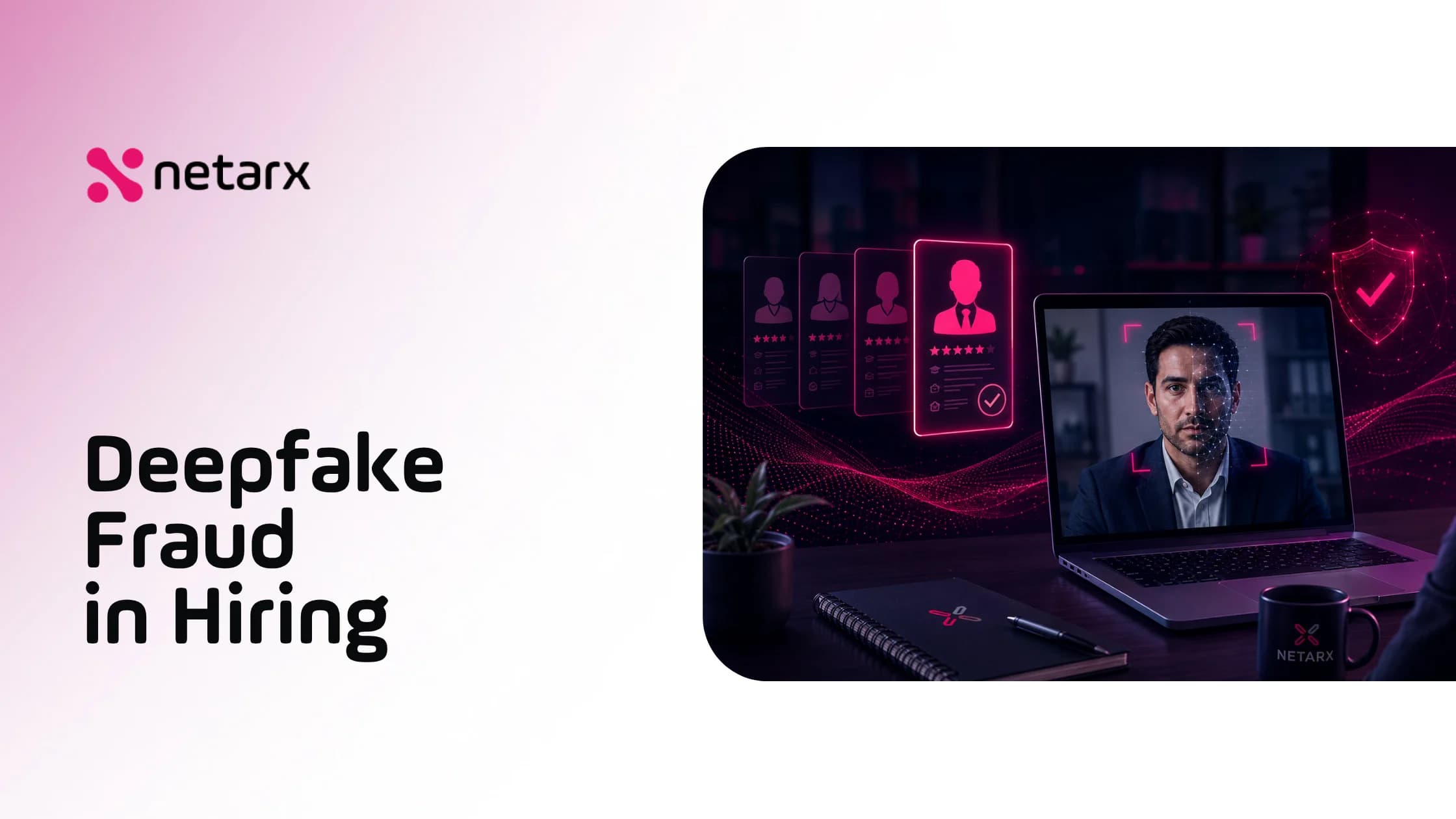
Deepfake fraud in hiring is the use of AI-generated or AI-altered media, a synthetic headshot, a cloned voice, a real-time face swap on a video call, to misrepresent who a job candidate is, in order to win a role, the real person could not obtain under their own identity. The defining feature is not technology.
blog
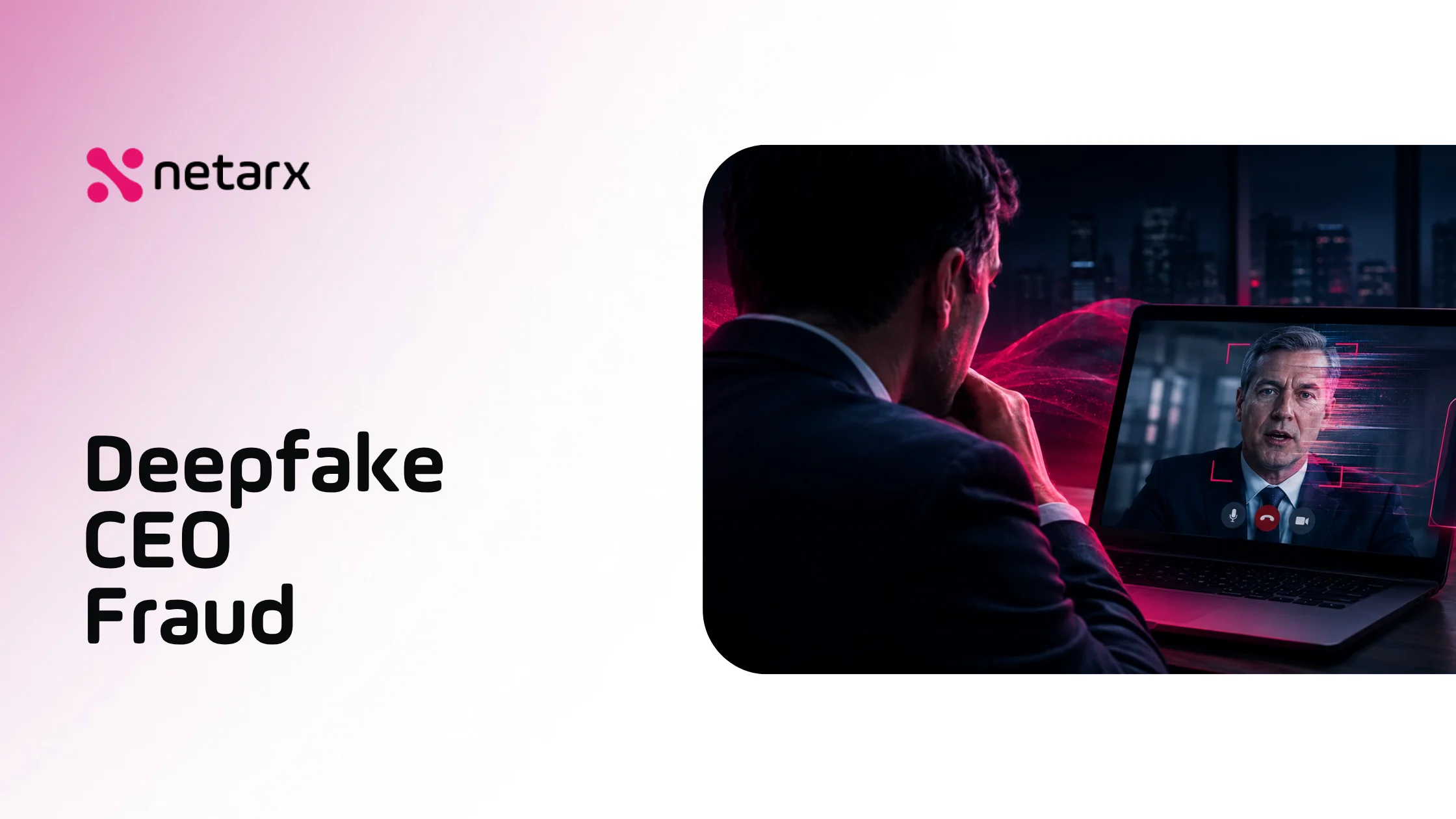
Deepfake CEO fraud is a payment fraud technique in which attackers impersonate a company executive using AI-generated video, cloned voice, or both, then use that fake identity to authorize a fraudulent transfer.
blog
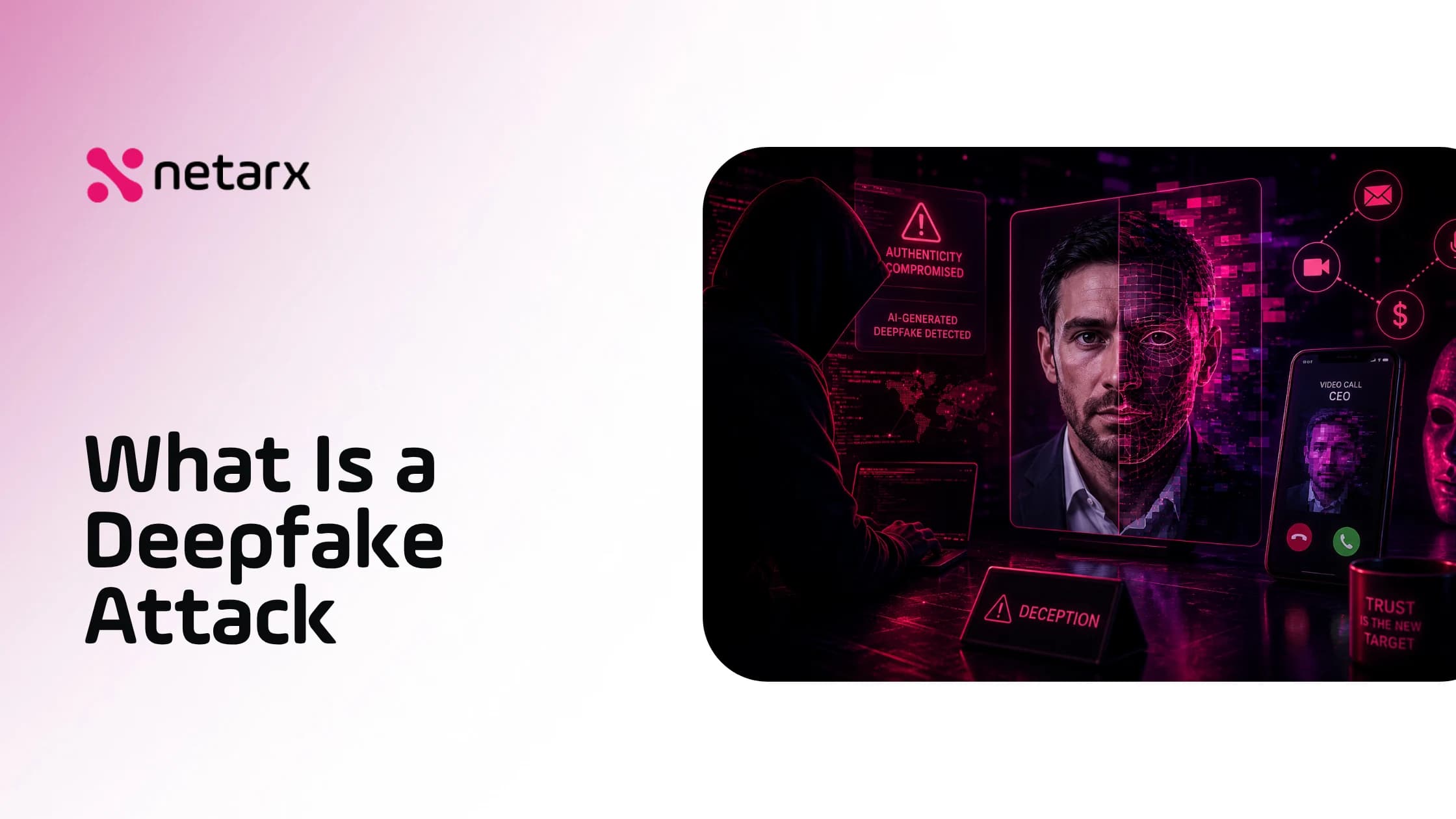
A deepfake attack is a social engineering scam in which criminals use AI-generated video, audio, or images to impersonate a real person, usually an executive, colleague, or vendor, so they can steal money, credentials, or sensitive data.