
Chief Marketing Officer
Published: January 27, 2026
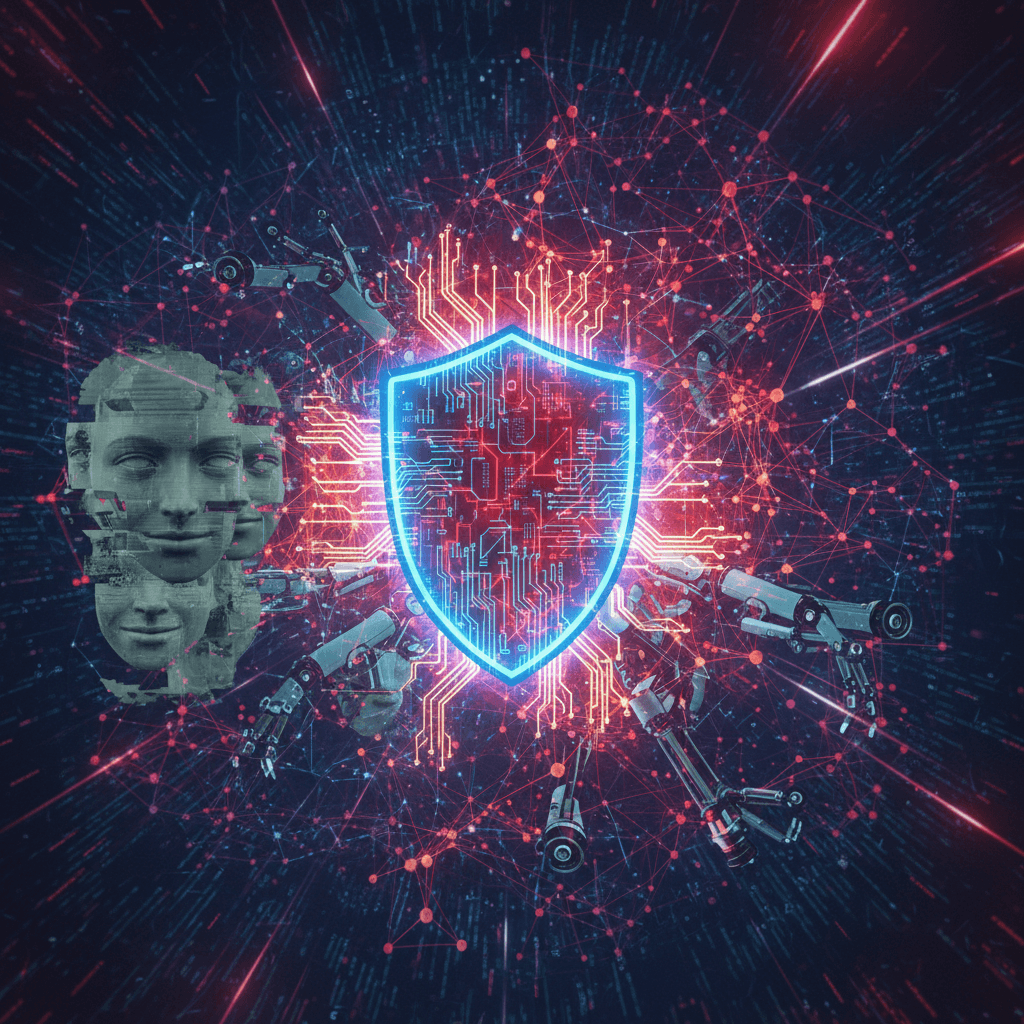
IDV vets new users at onboarding and ITDR watches existing accounts, but neither catches an AI-built synthetic identity that passes verification and then behaves like a normal new employee.
Closing the gap requires AI-powered IDV that detects deepfakes, synthetic identities, and voice cloning in real time, stopping fraudulent identities at the gate before they become trusted insiders.
The IDV and ITDR gap is the security blind spot in the handoff between two identity systems. Identity Verification (IDV) vets users at the front door, and Identity Threat Detection and Response (ITDR) monitors existing accounts for compromise. Neither questions whether an identity was fake from the start.
The catch: AI-generated synthetic identities can pass traditional IDV, get onboarded as legitimate users, and then operate undetected by ITDR, because to those systems the attacker is the baseline, not an anomaly.

Two systems, one gap. IDV checks the door, ITDR watches inside, and the handoff is the blind spot.
Synthetic identities pass IDV. AI creates personas that look and act real.
ITDR cannot help. A fake identity has no abnormal baseline to flag.
AI makes it scalable. Fraudulent onboarding can be automated across thousands of targets.
Verify with AI at the gate. Use real-time deepfake, voice, and behavioral analysis before access is granted.
In This Article
In the executive suite, risk management is a function of visibility. Leaders deploy sophisticated frameworks to monitor internal and external threats, yet a dangerous blind spot has emerged in a place few are looking: the gap between identity verification and threat detection. As generative AI becomes a common tool for adversaries, this gap represents a significant, unquantified financial and reputational risk.
Organizations invest heavily in two distinct identity security pillars: Identity Verification (IDV) to vet new users and Identity Threat Detection and Response (ITDR) to monitor existing ones. The flawed assumption is that these two systems provide end-to-end protection. The reality is that AI-generated synthetic identities can pass traditional IDV, enter the organization as seemingly legitimate users, and operate undetected by ITDR systems that are not designed to question the authenticity of an identity once it is established. This strategic vulnerability requires immediate leadership attention.
To grasp the nature of this security gap, it is essential to delineate the functions of ITDR and IDV. While they both concern identity, they operate at different stages of the lifecycle and with fundamentally different objectives.
Identity Verification is the security checkpoint at your organization's front door. Its primary function is to confirm that an individual is who they claim to be before they are granted access. This process typically occurs during critical onboarding events, such as hiring an employee, registering a new customer, or adding a contractor to your systems.
Key Functions of Traditional IDV:
Document verification (passports, driver's licenses).
Background checks.
Knowledge-based authentication (answering personal questions).
IDV operates on a foundational, one-time trust decision. Once a person passes these checks, they are considered a legitimate entity and are handed off to internal systems.
Identity Threat Detection and Response is the security patrol inside your digital walls. It focuses on protecting existing, provisioned digital identities from compromise and misuse. ITDR solutions continuously monitor user accounts for signs that a legitimate identity has been taken over by a threat actor.
Key Functions of Traditional ITDR:
Detecting compromised credentials or session hijacking.
Monitoring for privilege escalation.
Identifying anomalous login patterns or lateral movement.
ITDR’s core assumption is that the identity it is protecting is authentic. Its purpose is to find a "wolf in sheep's clothing"—an attacker masquerading as a known, trusted user.
The strategic vulnerability lies in the handoff between IDV and ITDR. AI-powered attacks do not steal a legitimate identity; they create a fraudulent one that looks and acts real. This "wolf in wolf's clothing" passes IDV and is onboarded as a legitimate user.
Once inside, ITDR solutions have no basis to flag the account. There is no historical "normal" behavior to compare against because the identity is new. From the system's perspective, the attacker is the employee. They are not an anomaly; they are the baseline.
The commoditization of generative AI has turned this theoretical gap into an active and scalable threat vector. Adversaries no longer require nation-state resources to create credible, synthetic personas.
Real-Time Impersonation:
During a live video interview for a sensitive role, an attacker can use deepfake technology to appear as a qualified candidate. The voice, face, and mannerisms are all synthesized, deceiving human recruiters and standard biometric checks.
Synthetic Identities:
AI can generate a complete identity package—including realistic headshots, fabricated resumes, and consistent background details—that can withstand the scrutiny of many traditional IDV processes.
Attack Scalability:
AI enables threat actors to automate fraudulent applications and onboarding attempts at a massive scale. This makes it economically viable to target thousands of organizations simultaneously, waiting for one to make a mistake.
When a fraudulent identity is successfully onboarded, it becomes a trusted insider with legitimate access. This presents a direct threat to the organization's financial stability, regulatory standing, and brand reputation.
Consider this sequence of events:
An adversary uses AI to create a synthetic identity and passes a company's remote IDV process for a finance role.
The fraudulent "employee" is onboarded, receiving access to financial systems, vendor portals, and internal communications.
The ITDR system monitors the account but sees a new employee learning the ropes. Initial data access and communication patterns are not flagged.
The actor initiates fraudulent wire transfers, exfiltrates sensitive customer data, or plants ransomware, all while appearing as a legitimate user.
By the time the malicious activity is discovered, the financial and operational damage is already done. The incident response is complicated by the fact that the actions were performed by a credentialed user, muddying the audit trail and delaying remediation.
To close this security gap, leaders must invest in a new layer of defense: AI-powered IDV that operates in real-time. This advanced form of verification is specifically designed to detect the subtle hallmarks of AI-generated content during the verification process itself. It acts as a necessary filter before an identity is ever created or provisioned.
Real-Time Deepfake Detection:
This technology analyzes live video streams during onboarding interviews or authentication events. It identifies microscopic artifacts and inconsistencies characteristic of AI-manipulated media, flagging fraudulent candidates before a hiring decision is made.
Voice Biometric Analysis:
Advanced audio analysis can distinguish between a real human voice and a synthesized one. This capability scrutinizes audio during phone screens or voice authentication prompts to detect AI-generated "voice skins."
Behavioral Analytics:
During written communications or system interactions, these tools can analyze typing cadence, mouse movements, and other patterns to differentiate between human and automated (bot) behavior.
The emergence of AI-generated identity attacks forces a strategic rethink of cybersecurity investment. Relying on ITDR to catch a threat that has already bypassed your front door is an untenable position. The financial and reputational risk posed by a single, successful synthetic identity infiltration is too great to ignore.
The solution is to integrate proactive, AI-aware defenses at the earliest point in the identity lifecycle. By deploying advanced IDV solutions capable of detecting deepfakes and other AI manipulations, organizations can bridge the critical gap between verification and threat detection. This ensures that fraudulent identities are stopped at the gate, preventing them from ever becoming a trusted insider threat. It is a necessary and strategic investment to safeguard enterprise assets in an era of increasingly sophisticated threats.
SOURCES & REFERENCES
Justice Department Disrupts North Korean Remote IT Worker Fraud Schemes. U.S. Department of Justice (August 8, 2024). Charges in schemes where overseas workers used stolen and synthetic identities to obtain remote jobs at U.S. companies.
Digital Identity Guidelines (NIST SP 800-63-4), Second Public Draft. NIST (August 2024). Defines identity-proofing, authentication, and presentation-attack (liveness) detection standards for verifying who a user really is.
Science & Tech Spotlight: Combating Deepfakes (GAO-24-107292). U.S. Government Accountability Office (March 11, 2024). Finds that deepfakes can defeat detection and biometric checks in real-world conditions.
Reducing Risks Posed by Synthetic Content (NIST AI 100-4). NIST and the U.S. AI Safety Institute (November 2024). Reviews the technical limits of synthetic-content detection and authentication.
Criminals Use Generative Artificial Intelligence to Facilitate Financial Fraud. FBI Internet Crime Complaint Center (December 3, 2024). Warns that criminals use AI-generated media and voice cloning to impersonate trusted people.
Alert on Fraud Schemes Involving Deepfake Media Targeting Financial Institutions (FIN-2024-Alert004). U.S. Treasury Financial Crimes Enforcement Network (November 13, 2024). Reports rising deepfake media used to bypass identity verification.

 Verified
Chief Marketing Officer
Steven is a highly accomplished Marketing executive and author with demonstrated success in driving transformational change, building great products, and solving complex problems that increase the bottom line. His highly diverse background includes experience and expertise across eCommerce, Digital, Product Management, and Marketing in B2B and B2C markets with an emphasis on Cybersecurity, AI, SaaS and subscription business models. He has built world-class, high-performing teams at prominent global brands including VMware, Symantec (Norton), McAfee, Hewlett-Packard, WeaveWorks, Qualys, and Informatica.

Identity Verification (IDV) confirms that a person is who they claim to be before they are granted access, usually at onboarding. Identity Threat Detection and Response (ITDR) monitors existing, provisioned accounts for compromise or misuse. IDV guards the front door, while ITDR patrols inside.
blog
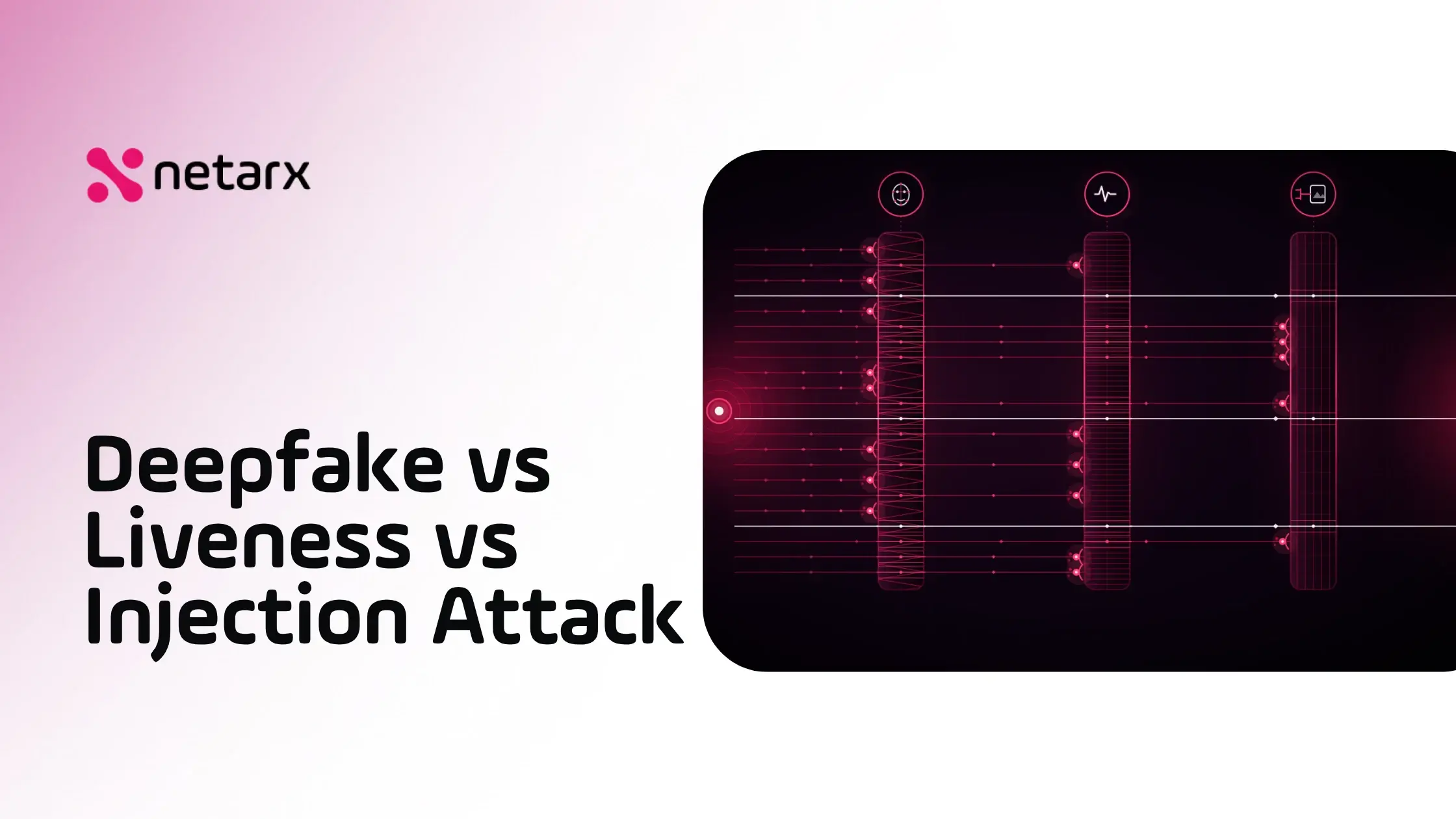
Deepfake detection asks whether media is synthetic or manipulated. It catches AI faces and cloned voices, but can miss high quality fakes and says nothing about who is really on the other end.
blog
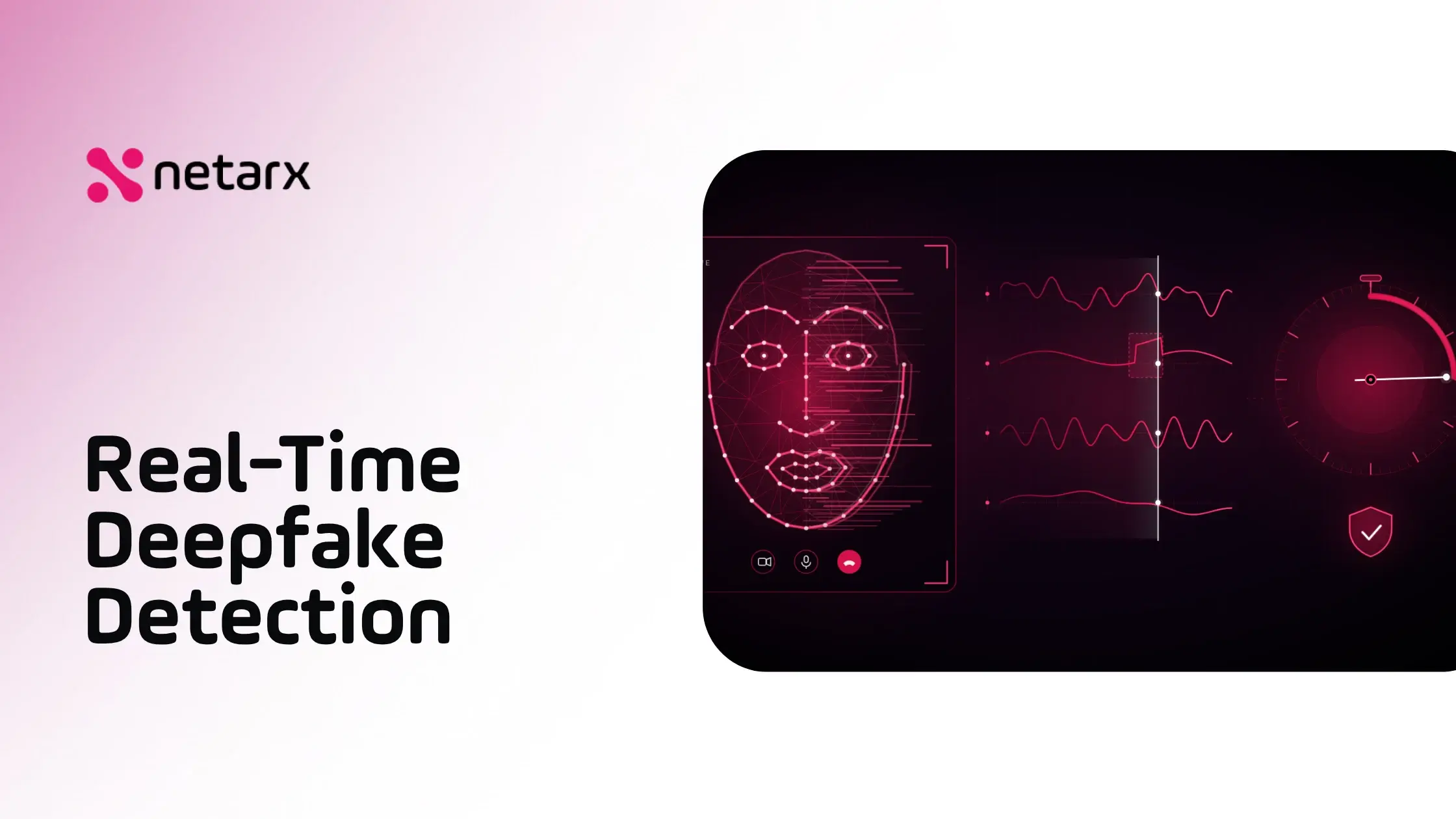
Real-time deepfake detection analyzes live video, voice and messages as they happen and returns a trust verdict while the conversation is still in progress, before anyone acts on a fraudulent request. It works by streaming short windows of media and context through several models at once: visual forensics, audio forensics, metadata and device checks, and behavioral signals, then fusing them into one verdict.
blog
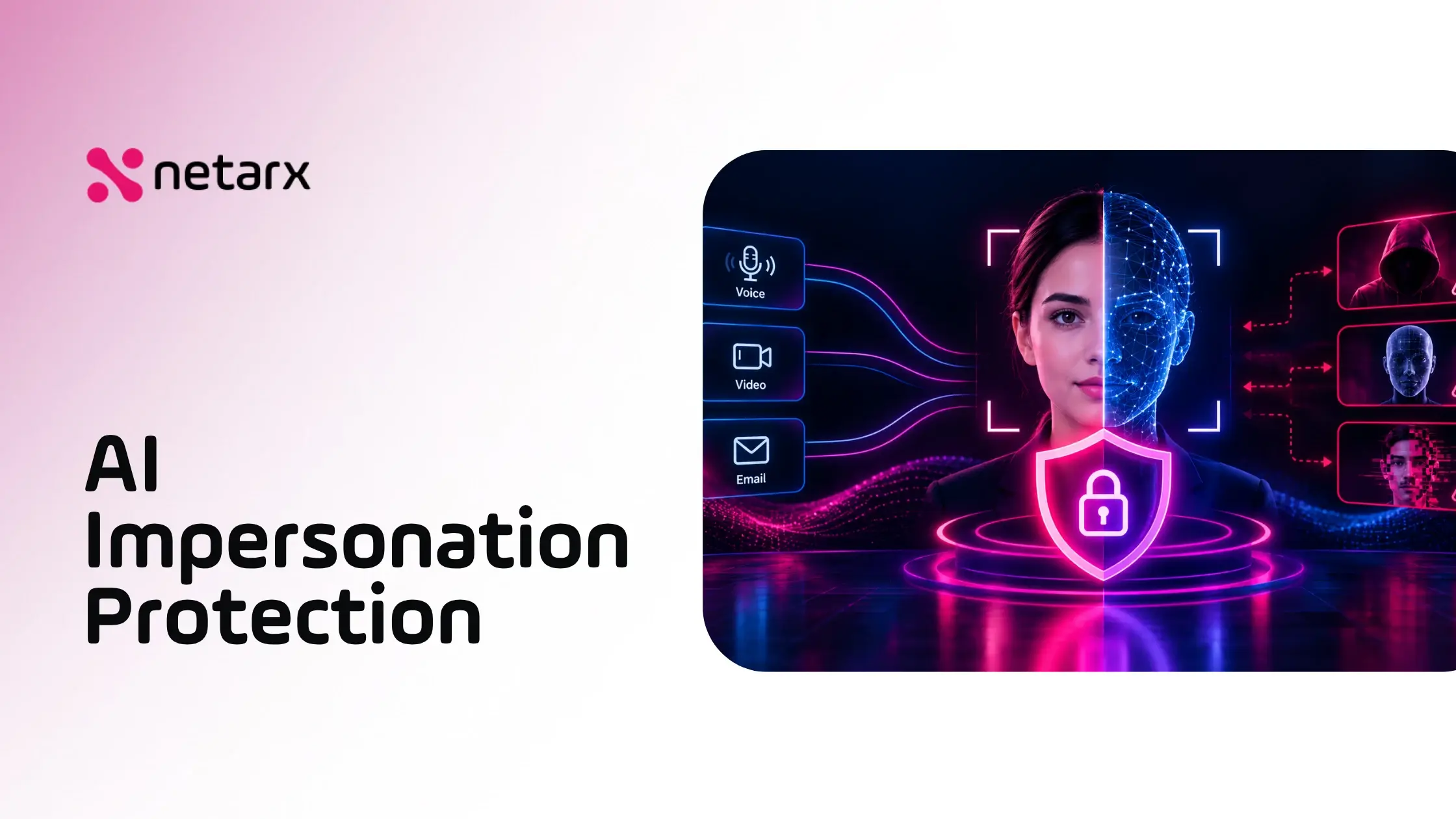
AI impersonation fraud uses cloned voices, deepfake video and AI-written messages to pose as executives, vendors or candidates. It is mainstream: 62% of organizations saw a deepfake attack in the past year (Gartner, 2025).