
Chief Executive Officer
Published: November 6, 2025

AI deepfakes and disinformation can impersonate executives and spread false narratives that crater stock price, customer trust, and brand equity in hours, faster than PR can respond.
Defense means shifting from reactive PR to a proactive security posture: real-time forensic media analysis with clear signals and a tamper-proof audit trail to detect and debunk fakes fast.
Deepfakes are AI-generated synthetic video, audio, or images that convincingly imitate real people; disinformation is false information deliberately spread to deceive. Together, they let attackers impersonate executives and push false narratives, such as a fake CEO “announcement” or a fabricated “admission”, to manipulate public perception and damage a brand.
The catch: standard PR and social-monitoring tools are reactive, they track sentiment but can’t forensically prove a video or audio clip is fake. By the time a manual denial goes out, a single deepfake can already have reached millions.

Reputation is a security issue. Brand protection is now a critical security imperative, not just PR.
Seeing isn’t believing. Deepfakes can fake a CEO recall or a CFO “confession.”
PR tools are reactive. They track sentiment but can’t prove media is fabricated.
Speed is the threat. A single deepfake can reach millions in hours.
Go proactive. Real-time forensic detection plus a tamper-proof audit trail.
In This Article
A company's reputation is one of its most valuable assets, built over years of consistent effort and customer trust. Today, that hard-won trust can be destroyed in hours by a sophisticated disinformation campaign. Malicious actors are now armed with advanced tools like deepfakes and AI-generated content, making it easier than ever to impersonate executives, spread false narratives, and manipulate public perception. For business leaders, protecting brand integrity is no longer just a public relations task—it's a critical security imperative.
This post explores the modern threats to brand reputation posed by digital disinformation. We will break down how these campaigns can inflict lasting damage and outline how a proactive, multi-layered security strategy can serve as a vital defense, helping organizations neutralize threats before they escalate, safeguard stakeholder trust, and maintain market stability.
Disinformation campaigns are no longer limited to fake news articles or manipulated photos. The rise of generative AI allows attackers to create highly convincing fake videos and audio of company leaders, making it incredibly difficult for the public—and even internal teams—to distinguish fact from fiction. This creates a volatile environment where a brand can quickly lose control of its own narrative. The consequences are multifaceted and severe.
Corporate sabotage has entered a new era. A deepfake video of a CEO announcing a product recall that never happened, or a CFO admitting to falsified earnings, can spread like wildfire on social media. The immediate impact can include a plummeting stock price, customer panic, and a rapid erosion of brand trust that may take years to rebuild. Once this content is online, it is nearly impossible to contain.
Standard social media monitoring and PR tools are reactive by nature. They can help track the spread of negative sentiment but often lack the forensic capabilities to definitively prove that a piece of media is a fabrication. By the time a communications team can issue a manual denial, the damage is already done. The speed of disinformation far outpaces the speed of traditional corporate response.
False information spreads across global networks and social media platforms at an alarming rate. Algorithms designed to maximize engagement can inadvertently amplify sensationalist or shocking content, regardless of its authenticity. A single deepfake video can reach millions of people in a matter of hours, making traditional takedown requests slow and ineffective.
Publicly traded companies have a responsibility to combat market manipulation. When a disinformation campaign targets a company's financial standing, leadership must act decisively. This includes reporting the incident to regulatory bodies and providing irrefutable proof that the content was fabricated. A failure to do so can trigger investigations, fines, and further damage the company's standing with investors and regulators.
To counter these threats, organizations must move from a reactive PR stance to a proactive security posture. Netarx’s Disinformation Security platform delivers a powerful, purpose-built solution designed to protect brands in the age of deepfakes and AI-driven fraud. Unlike traditional monitoring tools, Netarx offers an easy-to-deploy SaaS solution that requires no code or integration, providing traffic-light signals for employees to quickly identify and respond to potential threats.
Here's how Netarx addresses the most pressing challenges:
Netarx provides an easy-to-use SaaS platform that simplifies deployment and eliminates the need for complex integrations. Employees are guided by intuitive traffic-light signals, making it straightforward to identify and address potential disinformation threats.
Netarx’s SaaS platform continuously monitors digital channels and provides real-time alerts using a simple traffic-light system, ensuring employees can quickly and confidently address potential threats without requiring technical expertise. This proactive surveillance drastically shortens response times when a threat is identified.
Netarx’s platform simplifies incident response by providing clear, actionable alerts and traffic-light signals, enabling teams to act swiftly without needing extensive training or technical knowledge.
Through these specialized technologies and workflows, Netarx delivers not just disinformation detection, but rapid, coordinated defense—empowering organizations to actively safeguard their brand reputation in a digital world where seeing is no longer believing.
Deploying a Disinformation Security platform delivers immediate and powerful results, enabling an organization to defend its brand integrity and strengthen its overall resilience against modern information warfare.
100% Disinformation Assurance:
This multi-layered detection process gives leadership complete confidence in their ability to identify and invalidate fraudulent communications. It allows them to protect the corporate narrative with certainty and authority.
Proactive Mitigation of Reputational Risk:
The combination of biometric baselining and real-time forensic analysis successfully defends against brand damage and market manipulation. It protects stakeholder value and preserves the brand equity that has been carefully built over many years.
Guaranteed Compliance and Rapid Response:
The platform generates a detailed, tamper-proof audit trail for every piece of analyzed content. This provides the documentation needed to satisfy regulatory disclosure requirements and demonstrate a proactive defense against malicious information campaigns.
In an environment where digital content can be easily fabricated, hope is not a strategy. Brands can no longer afford to wait for a crisis to happen before they act. Protecting your reputation requires a fundamental shift towards a security-first mindset, where verifying the authenticity of communications is as crucial as cybersecurity.
By adopting a disinformation security strategy, companies can turn the tables on malicious actors. They can move from a position of vulnerability to one of strength, equipped with the tools to detect and debunk falsehoods before they can cause irreparable harm. This proactive approach is the new standard for protecting your brand, your stakeholders, and your future.
SOURCES & REFERENCES
FTC Announces Impersonation Rule Goes into Effect, Federal Trade Commission (April 1, 2024). The Government and Business Impersonation Rule targets impersonation of organizations and executives, increasingly powered by AI.
Science & Tech Spotlight: Combating Deepfakes (GAO-24-107292), U.S. Government Accountability Office (March 11, 2024). Warns that malicious deepfakes can erode trust, spread disinformation, and undermine reputations.
Reducing Risks Posed by Synthetic Content (NIST AI 100-4), NIST / U.S. AI Safety Institute (November 2024). Reviews detection, provenance, and watermarking approaches for synthetic content.
Criminals Use Generative Artificial Intelligence to Facilitate Financial Fraud, FBI Internet Crime Complaint Center (IC3), Public Service Announcement (December 3, 2024). Warns that criminals use AI-generated media to impersonate people and organizations.
FCC Makes AI-Generated Voices in Robocalls Illegal, Federal Communications Commission Declaratory Ruling (February 8, 2024). Confirms the Telephone Consumer Protection Act applies to AI-generated and cloned voices.
Alert on Fraud Schemes Involving Deepfake Media Targeting Financial Institutions (FIN-2024-Alert004), U.S. Treasury Financial Crimes Enforcement Network (FinCEN) (November 13, 2024). Reports rising fraud using deepfake media.

 Verified
Chief Executive Officer
CEO/Founder of Netarx LLC, Real-time detection of deepfake and social engineering threats via enterprise video, voice and email. Managing Partner of Koach Capital, a Private Equity firm managing a multitude of commercial real estate (CRE) funds whose focus is retail sale-leasebacks. Sandy's entrepreneurial success began by founding a network integration and services provider that served large enterprises. We focused on advanced technologies including Business Intelligence (BI), Network & Information Security, Virtualization, Storage Area Networks, Unified Communications and Data Center Services. In 2009, Netarx acquired the VAR business of Analysts International (including Sequoia and Entree Systems). In 2011 Netarx was acquired by Logicalis (a division of Datatec - Symbol LSE: DTC) and stayed on as its Chief Technology Officer. He continued to build by founding Verge.io (Formerly Yottabyte) and Service.com. Also, Sandy served as a General Partner of Ludlow Ventures, a venture capital fund focusing on investments in early-stage tech companies. Sandy contributes to the community via lectures, publications and developing new technologies - he currently holds 8 Patents.

It’s a campaign that uses false information, often amplified by AI deepfakes, to impersonate a company’s leaders or spread fabricated narratives, aiming to damage reputation, manipulate markets, or erode customer trust.
blog
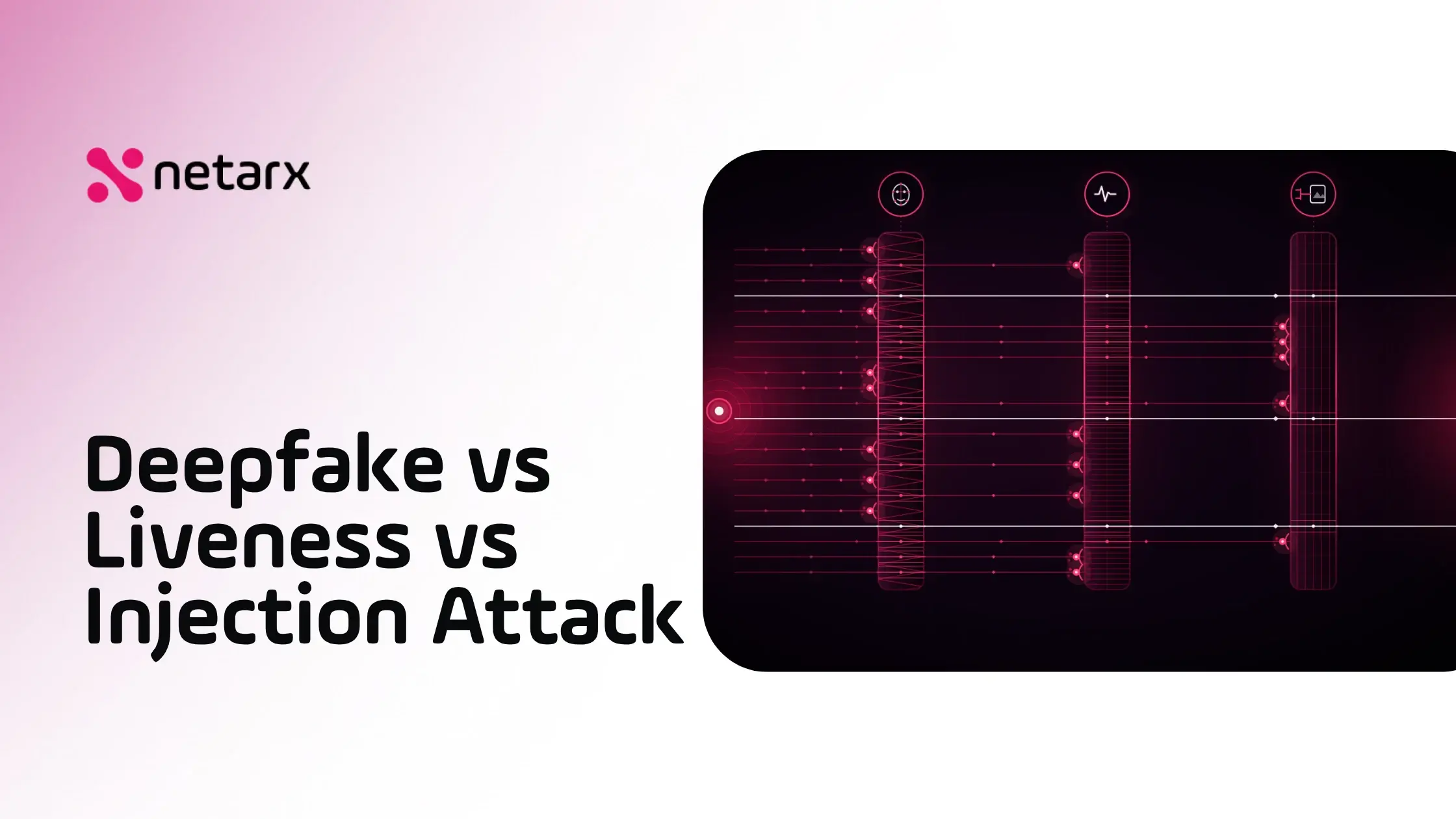
Deepfake detection asks whether media is synthetic or manipulated. It catches AI faces and cloned voices, but can miss high quality fakes and says nothing about who is really on the other end.
blog
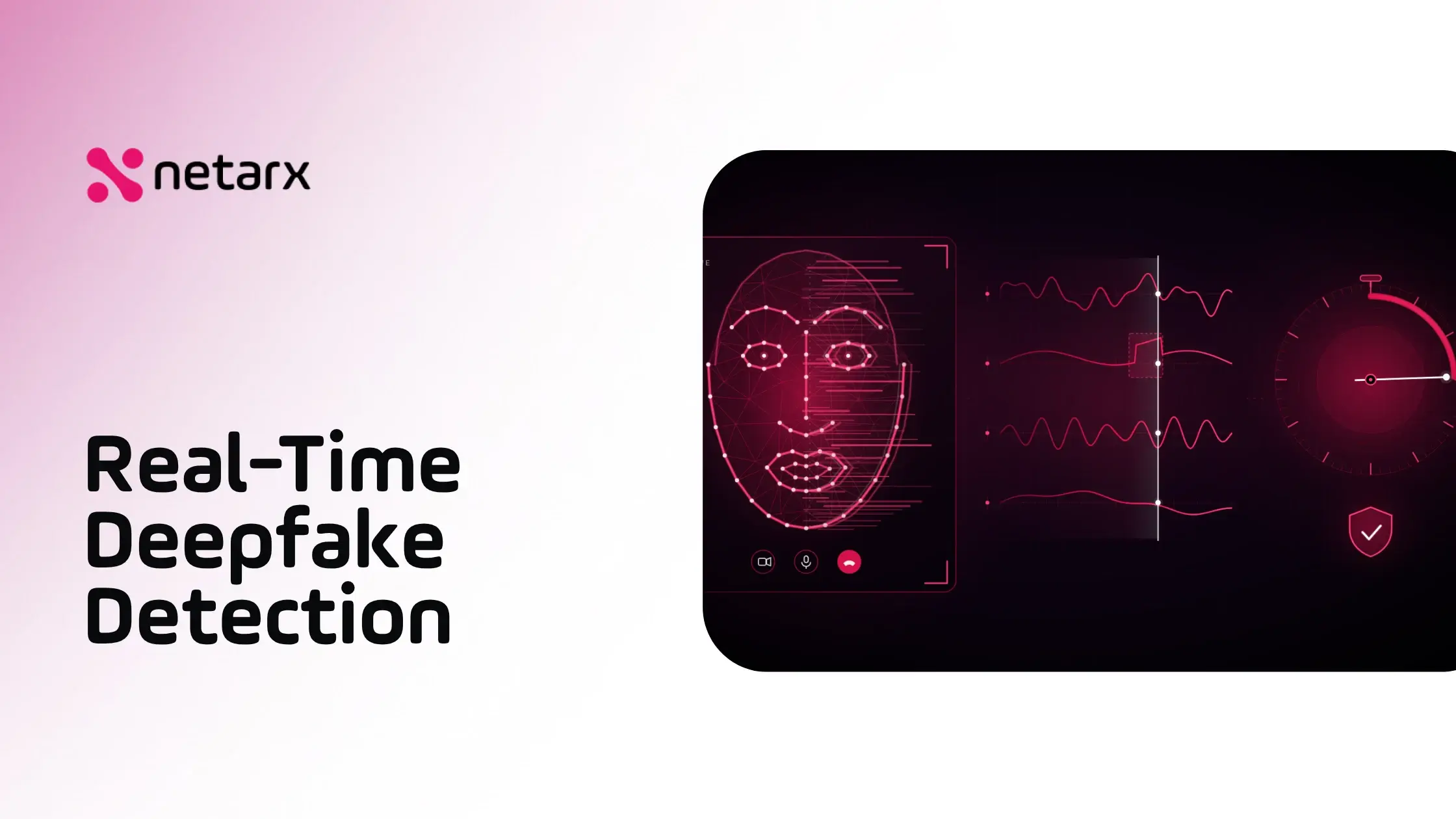
Real-time deepfake detection analyzes live video, voice and messages as they happen and returns a trust verdict while the conversation is still in progress, before anyone acts on a fraudulent request. It works by streaming short windows of media and context through several models at once: visual forensics, audio forensics, metadata and device checks, and behavioral signals, then fusing them into one verdict.
blog
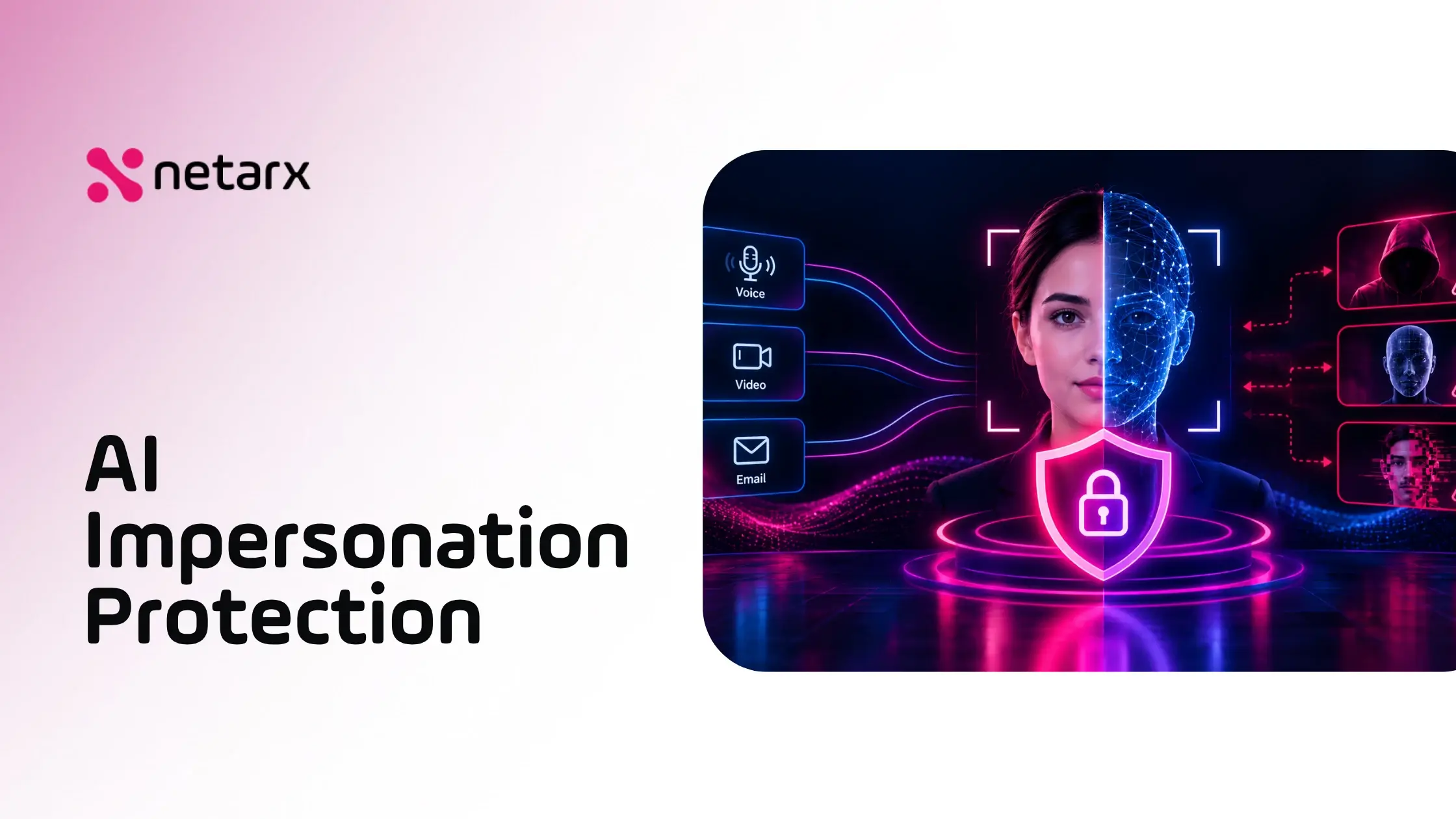
AI impersonation fraud uses cloned voices, deepfake video and AI-written messages to pose as executives, vendors or candidates. It is mainstream: 62% of organizations saw a deepfake attack in the past year (Gartner, 2025).