
Chief Executive Officer
Published: December 18, 2025

In 2025, AI-powered, multi-modal deepfake attacks (vishing plus real-time video) became commoditized, bypassed voice biometrics and outmaneuvered siloed point defenses, while compliance rules chased AI transparency.
For 2026, expect a shift from detection to automated resilience: cross-channel verification as standard, AI-driven SOCs, Zero Trust for content and identity, and rising budgets as AI fraud grows.
2025 was the year synthetic media went mainstream. Attackers combined deepfake audio (vishing) with real-time deepfake video to impersonate executives, bypass voice biometrics, and defeat siloed point defenses, while regulators raced to mandate AI transparency and data provenance.
For 2026, the shift is from detection to automated resilience: cross-channel verification as standard, AI-driven security operations, Zero Trust extended to content and identity, and larger budgets driven by rising AI fraud.

2025 was synthetic reality. Multi-modal deepfakes hit finance, healthcare, and beyond.
Biometrics got bypassed. AI-generated audio defeated voice authentication at major firms.
Point solutions failed. Siloed tools could not correlate cross-channel attack chains.
2026 is automated resilience. Cross-channel verification and AI-driven SOCs become standard.
Zero Trust meets content. Every email, voice memo, and video is untrusted until verified.
In This Article
As we close the book on 2025, the cybersecurity landscape looks vastly different than it did just twelve months ago. The rapid integration of generative AI into offensive toolkits has fundamentally altered the threat matrix. IT security professionals have moved from theoretical discussions about "AI risk" to battling sophisticated, automated campaigns daily.
This article provides a structured retrospective of the pivotal security events and trends that defined 2025. We will analyze the successes and failures in handling deepfake incidents and regulatory shifts. Furthermore, we will look ahead to 2026, offering authoritative predictions on how the industry must evolve to meet the next generation of threats. Specifically, we will examine the necessity of real-time protection and the shift toward cross-channel verification.
2025 was defined by the weaponization of synthetic media. Attack vectors that were once the domain of state-sponsored actors became commoditized, affecting organizations across finance, healthcare, and beyond.
The most significant trend of 2025 was the escalation of deepfake technology. We saw a marked increase in "multi-modal" attacks, where threat actors combined deepfake audio (vishing) with synthetic video in real-time communication platforms.
Executive Impersonation: C-suite fraud evolved beyond simple email compromise (BEC). Attackers utilized real-time deepfake video during video conferences to authorize fraudulent transfers.
Bypass of Biometrics: Traditional voice recognition systems faced severe challenges. Several high-profile financial institutions reported breaches where voice authentication was bypassed using AI-generated audio clips.
Compliance in 2025 was not static. Regulatory bodies globally scrambled to catch up with AI advancements. The introduction of stricter mandates regarding "AI transparency" and "synthetic data handling" forced organizations to rapidly audit their tech stacks.
Key regulatory shifts included:
Mandatory AI Disclosure: New frameworks required companies to disclose when customer interactions were AI-driven.
Data Provenance Requirements: Organizations had to implement stricter controls on data lineage to prove that their security logs had not been tampered with by AI-driven malware.
2025 exposed the fragility of point defenses. Security teams relying on siloed tools for email security, endpoint protection, and identity verification found themselves outmaneuvered by holistic attacks. Attackers exploited the gaps between these systems. A phishing email would lead to a deepfake voice call, which then facilitated a credential harvest—a chain that disjointed security tools failed to correlate in real-time.
Looking toward 2026, the strategy must shift from "detection" to "automated resilience." As attack vectors become fully automated, human intervention speeds will no longer suffice.
In 2026, we predict that single-channel authentication will be viewed as a vulnerability. To combat deepfakes, organizations will adopt cross-channel verification protocols as a standard operating procedure.
This means that a video call request might automatically trigger an out-of-band push notification to a mobile device, or a voice command will require simultaneous biometric confirmation via a separate hardware token. Security architects must design systems where trust is never established through a single medium.
Security Operations Centers (SOCs) will transition significantly toward AI-driven autonomy. The sheer volume of alerts generated by automated offensive AI will overwhelm human analysts.
Automated Response:
We expect to see a surge in "self-healing" networks that can isolate compromised endpoints and rotate credentials without human approval.
Predictive Analytics:
SOCs will move from reactive logging to predictive threat modeling, using internal data to forecast likely attack paths before they are exploited.
Zero Trust Architecture (ZTA) has traditionally applied to network access and identity. In 2026, this concept will extend to digital content itself.
A critical advancement will be the integration of decentralized identity authentication, which combines robust deepfake media detection with dynamic identity validation. This approach ensures that not only is the content secured, but the authenticity of the source is also confirmed, reducing the risk of impersonation attacks involving synthetic media.
Further, organizations will require advanced metadata analysis that spans multiple communication channels. By correlating metadata from various sources—such as email, voice, and video—security systems can detect inconsistencies and patterns indicative of cross-channel attacks. This multi-layered strategy will underpin a more resilient trust framework for enterprise communications.
Every piece of media—emails, voice memos, video feeds—will be treated as untrusted until cryptographically verified. We anticipate the widespread adoption of digital watermarking and content provenance standards (like C2PA) within enterprise communication tools as a starting point.
Zero Trust Architecture (ZTA) has traditionally applied to network access and identity. In 2026, this concept will extend to digital content itself.
Budget allocation for 2026 will be heavily influenced by the expected growth in fraud, projected to reach $40 billion by 2027, and the lack of existing protection mechanisms. Organizations will need to invest in a new wave of technologies to combat these threats. Gartner predicts that every employee will be impacted by a deepfake by 2027, underscoring the urgency for advanced solutions. These technologies will include automated fraud detection systems, enhanced AI governance tools, and real-time threat mitigation platforms.
To prepare for 2026, IT security professionals must take methodical steps today. The focus should be on integration and scalability.
Legacy systems are a weak link in a modern defense strategy. They lack the ability to detect and prevent compromised humans or impersonations. They also lack real-time threat intelligence sharing. Architects must prioritize adding AI detection platforms - especially those that go beyond legacy multi-factor authentication (MFA) without modern encryption standards.
Traditional security awareness training is failing. Showing employees static slides about phishing is ineffective against a real-time deepfake video call. Training programs in 2026 must be "threat-centric," simulating live deepfake scenarios and social engineering attacks to build genuine resilience among staff.
When selecting new vendors, prioritize those that offer ability to aggregate signals from cross-channels, leverage large numbers of metadata, and use many LLM's to authenticate users BEFORE being compromised. Single-channel and media-only analysis technologies are limited patchwork solutions that don't protect the organization.
The transition from 2025 to 2026 represents a critical juncture for IT security. The challenges of synthetic media and automated attacks are formidable, but they are manageable with the right strategy.
Success in 2026 will depend on your ability to implement scalable, real-time protection that integrates seamlessly into your environment. By moving away from point solutions and embracing a holistic, cross-channel approach to security, you can ensure compliance, protect your assets, and maintain trust in an increasingly synthetic digital world.
Assess your current exposure: Conduct a specific audit on your organization's vulnerability to deepfake and social engineering attacks.
Review your tech stack: Identify point solutions that can be consolidated into integrated platforms.
Update your incident response plan: Ensure your playbooks specifically address AI-generated threats and synthetic media incidents.
SOURCES & REFERENCES
Science & Tech Spotlight: Combating Deepfakes (GAO-24-107292). U.S. Government Accountability Office (March 11, 2024). Examines how deepfakes work and why detection methods may not reliably identify them.
Reducing Risks Posed by Synthetic Content (NIST AI 100-4). NIST and the U.S. AI Safety Institute (November 2024). Reviews detection, provenance, and watermarking approaches for synthetic media.
Artificial Intelligence Risk Management Framework: Generative AI Profile (NIST AI 600-1). National Institute of Standards and Technology (July 26, 2024). Maps generative-AI risks to concrete governance and management actions.
Criminals Use Generative Artificial Intelligence to Facilitate Financial Fraud. FBI Internet Crime Complaint Center (December 3, 2024). Warns that criminals use AI-generated media and voice cloning to scale fraud.
Alert on Fraud Schemes Involving Deepfake Media Targeting Financial Institutions (FIN-2024-Alert004). U.S. Treasury Financial Crimes Enforcement Network (November 13, 2024). Reports rising deepfake media used to bypass identity verification.
Use Secure Cloud Identity and Access Management Practices. NSA and CISA Cybersecurity Information Sheet (March 7, 2024). Recommends phishing-resistant MFA and stronger identity and access management.

 Verified
Chief Executive Officer
CEO/Founder of Netarx LLC, Real-time detection of deepfake and social engineering threats via enterprise video, voice and email. Managing Partner of Koach Capital, a Private Equity firm managing a multitude of commercial real estate (CRE) funds whose focus is retail sale-leasebacks. Sandy's entrepreneurial success began by founding a network integration and services provider that served large enterprises. We focused on advanced technologies including Business Intelligence (BI), Network & Information Security, Virtualization, Storage Area Networks, Unified Communications and Data Center Services. In 2009, Netarx acquired the VAR business of Analysts International (including Sequoia and Entree Systems). In 2011 Netarx was acquired by Logicalis (a division of Datatec - Symbol LSE: DTC) and stayed on as its Chief Technology Officer. He continued to build by founding Verge.io (Formerly Yottabyte) and Service.com. Also, Sandy served as a General Partner of Ludlow Ventures, a venture capital fund focusing on investments in early-stage tech companies. Sandy contributes to the community via lectures, publications and developing new technologies - he currently holds 8 Patents.

2025 was defined by the weaponization of synthetic media. Multi-modal deepfake attacks combined vishing audio with real-time video to impersonate executives and bypass voice biometrics, point solutions failed to correlate cross-channel attacks, and regulators pushed new AI transparency and data-provenance mandates.
blog
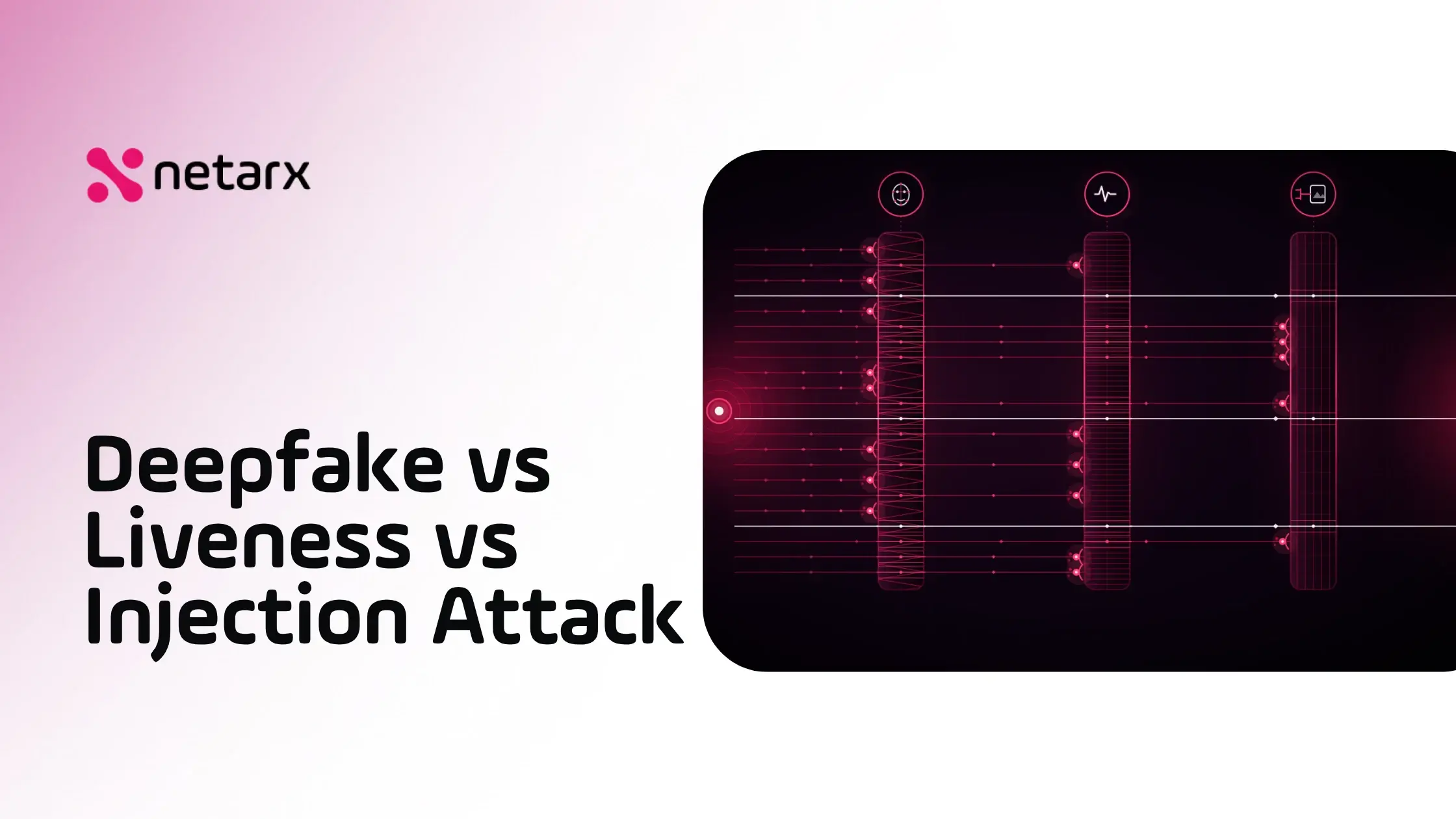
Deepfake detection asks whether media is synthetic or manipulated. It catches AI faces and cloned voices, but can miss high quality fakes and says nothing about who is really on the other end.
blog
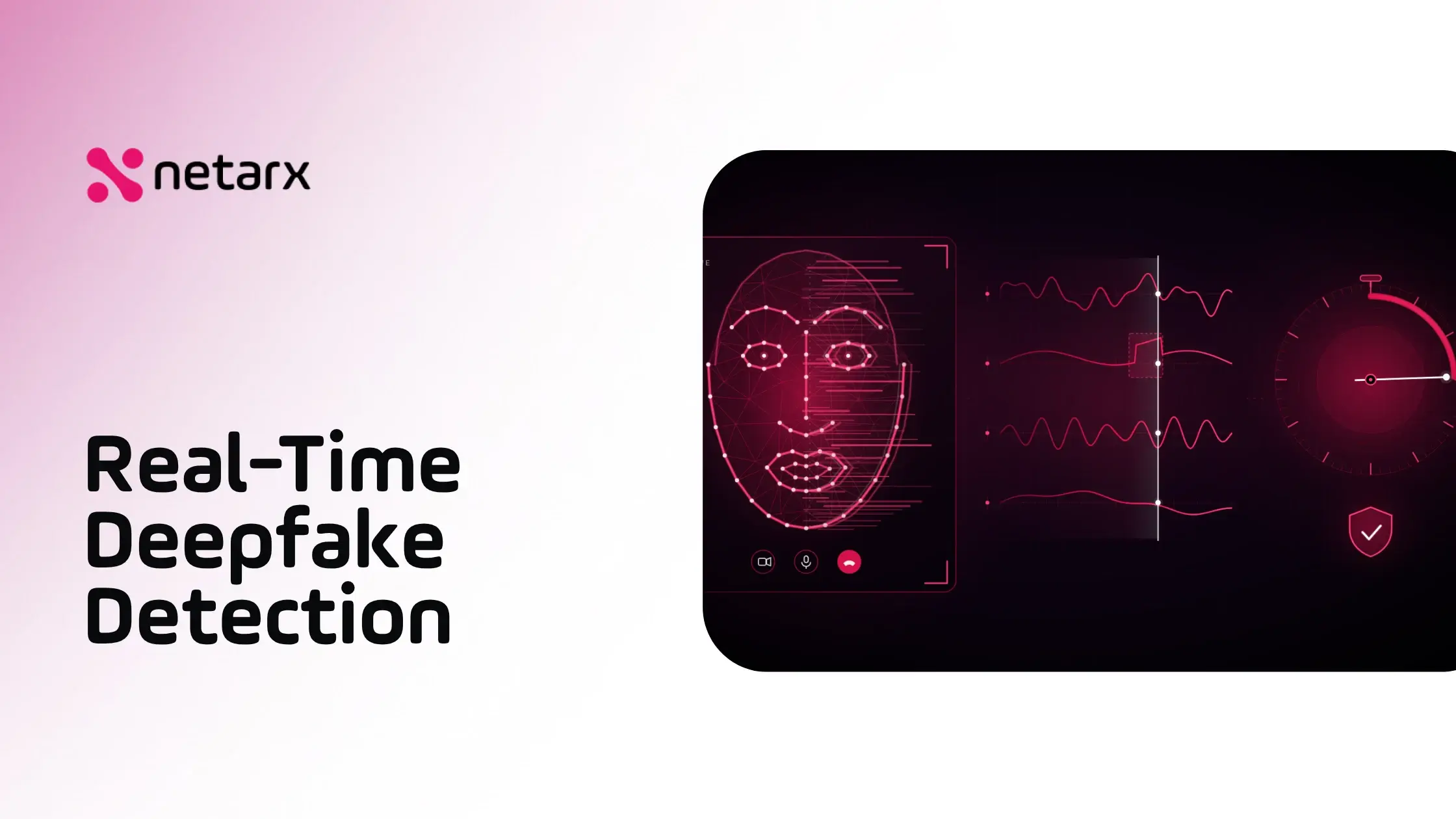
Real-time deepfake detection analyzes live video, voice and messages as they happen and returns a trust verdict while the conversation is still in progress, before anyone acts on a fraudulent request. It works by streaming short windows of media and context through several models at once: visual forensics, audio forensics, metadata and device checks, and behavioral signals, then fusing them into one verdict.
blog
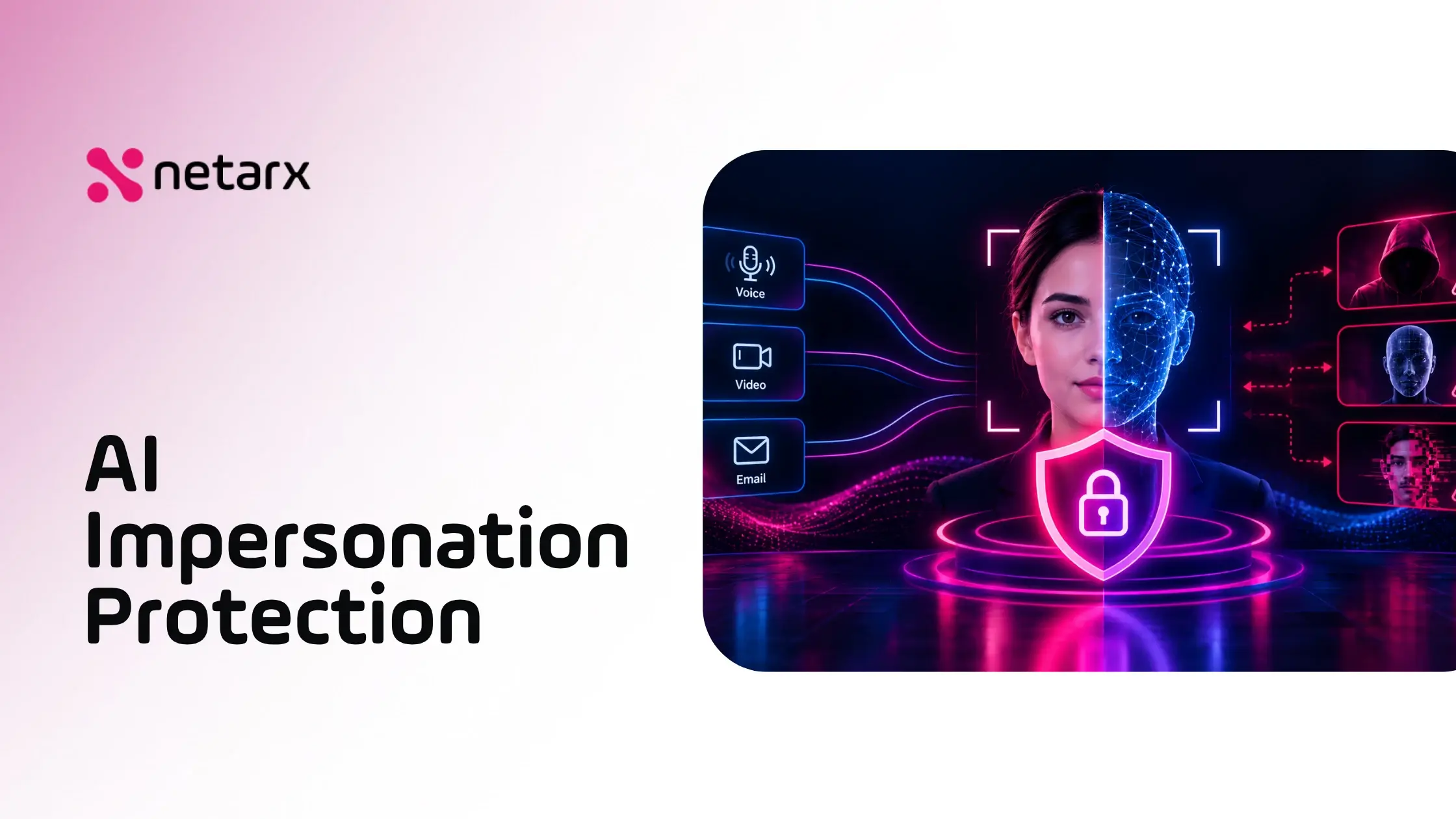
AI impersonation fraud uses cloned voices, deepfake video and AI-written messages to pose as executives, vendors or candidates. It is mainstream: 62% of organizations saw a deepfake attack in the past year (Gartner, 2025).